


Saggi in evidenza » Saggi, articoli su riviste. Krugman ed altri » Selezione del Mese
La grande trasformazione della Cina Parte II: recensione dell’ultimo libro di Odd Arne Westad e Chen Jian. Di NICHOLAS MULDER (da Weltinnenpolitik, 25 febbraio 2026)
Feb 25, 2026
China’s Great Transformation
Part II: A review of Odd Arne Westad and Chen Jian’s latest book.
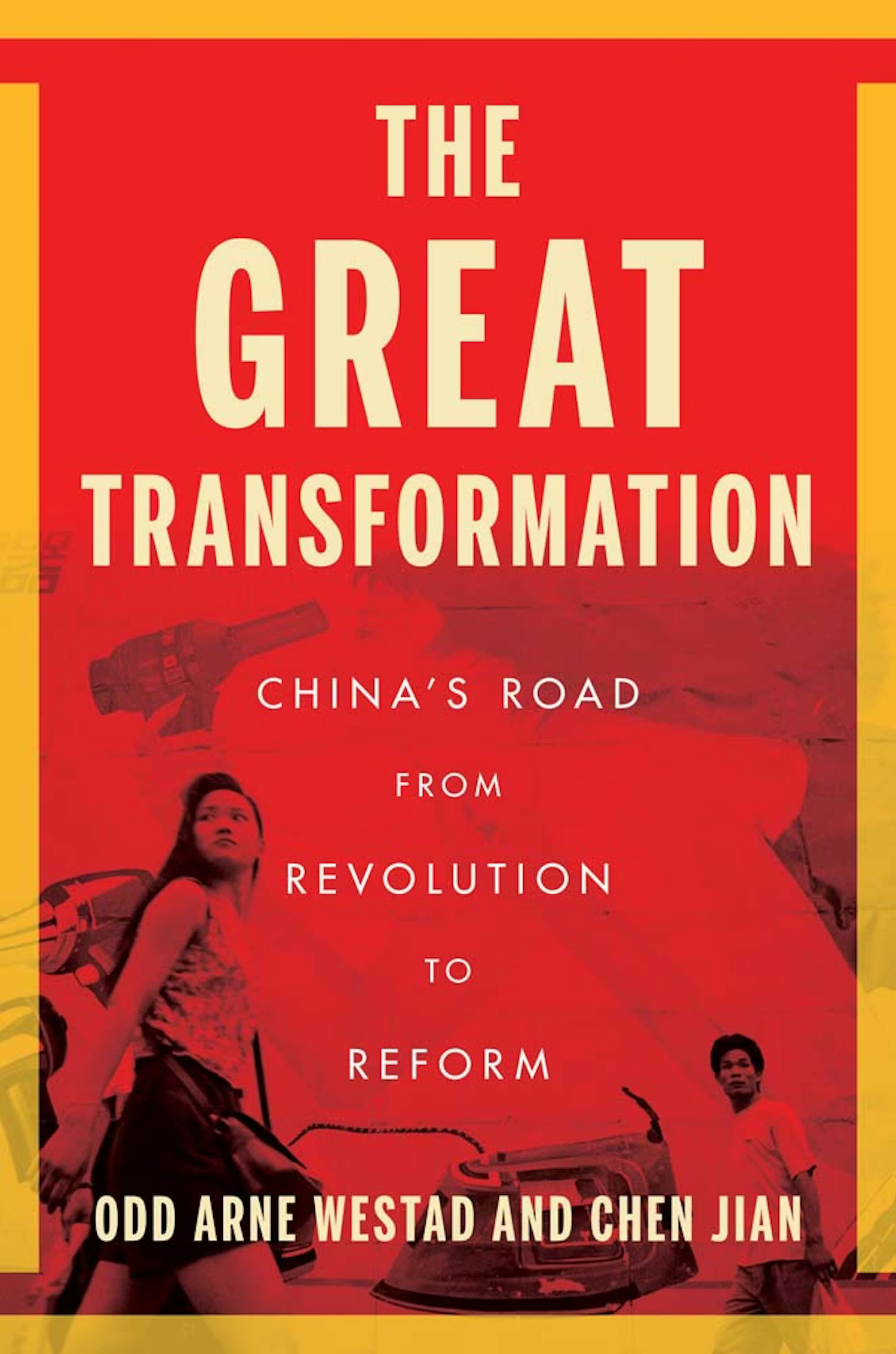
 This is the second part of my review of two “Great Transformation” books. The first, Branko Milanovic’s The Great Global Transformation: Market Liberalism in a Multipolar World (Allen Lane, 2025), is here. This part turns to Odd Arne Westad and Chen Jian’s The Great Transformation: China’s Road from Revolution to Reform (Yale, 2024).
All books that study transformative periods have some underlying theory of historical change. Authors either explicitly formulate their philosophy of history, or else implicitly adopt one in the course of analysis. What kind of theory one adheres to is also shaped by professional formation and intellectual outlook. Branko Milanovic is an empirical economist who takes a broadly materialist view of global change: to him the plot of modern economic history is one in which the West experienced a Great Divergence from the rest of the world between 1800 to the 1970s, after which the ascendance of Asia produced a Great Convergence in the last half-century.
Westad and Chen have a different background. Both are historians of China and of the Cold War. In the final analysis, they see politics as the domain that is in command across the key junctures of modern history. To put the difference more sharply: for Milanovic political upheavals like the right-wing nationalist attack on globalism are the outcome of economic tensions that prove unmanageable. For Westad and Chen, by contrast, it is the use of power to pursue visions of development that is the essence of modernity. Thus Milanovic’s study skews more towards the primacy of economics, whereas in Westad and Chen’s book it is the primacy of politics that comes through most clearly.
Conservative reform
From the outset, Westad and Chen emphasize that the Reform and Opening Up begun by Deng Xiaoping in 1978 exhibits “strong parallels with earlier reform periods in Chinese history”. Notwithstanding the association of this era with economic liberalization, this was an elite-driven reform project that intended to:
“resc[ue] the state by finding new sources for growth and development. From an elite perspective, at least, there is a conservative and state-centered aspect to Chinese reform that one should never lose track of from the 1970s up to today.” (p. 5).
It is never guaranteed that a ruling class that chooses to engage in reform will be successful. The process can fail in at least two ways: by obstruction or by cascade.
One is when vested interests block the adoption of new ideas and practices and the problems that reform seeks to address remain unresolved. In the wake of the First Opium War (1839-1842), several aristocratic Manchu and Mongol reformers tried to convince the Qing dynasty to adopt Western military technology and drill and move into the steam age. But a powerful faction around Lin Zexu blamed defeat on internal treason, arguing that the problem lay in insufficient political loyalty rather than institutions, industrial strength, and skills. The result was that the Qing dynasty failed to gain military parity with the West, and by 1860 saw its imperial capital in flames. In the wake of the Taiping Civil War (1851-1864), the Qing slowly adopted some self-strengthening measures. But by this point it was too late to prevent the structural infringement of Chinese sovereignty, and the state had lost much of its power in the provinces.
The second way in which reforms can go wrong is that they escape the control of their architects. Initial changes in policy can awaken forces that acquire a dynamic of their own, and which ultimately backfire by undermining the power of the reformers themselves. Gorbachev’s efforts in the Soviet Union are a good example of this: intended to save the USSR through economic restructuring and political liberalization aimed at the construction of a multinational socialist democracy, his project of renewal instead brought material dysfunction and awakened the forces of nationalism–both Russian and peripheral–and ended with the disintegration of his federal state.
Westad and Chen locate the sources of reform in the unresolved problems generated by Maoism. Yet there is more to their story than a standard liberal account of China, in which the country tried for three decades to make an untenable system of communist economic planning work before Deng simply gave in to capitalist necessity. The book extensively covers the full range of political debate about the course of China’s development in the 1960s and 1970s, when several different agendas were competing within Maoism. Officials were aware of their country’s material and technological limitations and its capacity for dramatic missteps (chief among which was the mass starvation of the Great Leap Forward in 1958-1961) and tried to correct for it by embracing industrial modernization and building trade links with other countries.
These countervailing tendencies become apparent thanks to Westad and Chen’s “long 1970s” chronology. Their narrative begins in the mid-1960s, some years before the Cultural Revolution started, and moves through the tumultuous Seventies before ending in the mid-1980s, as the Reform and Opening Up era kicked into high gear. What becomes clear is that the revolutionary Maoist years were not a simple opposite or antithesis to the reform years–that is, a period of early error corrected by the belated advent of truth–but rather a more complex and unruly incubator of vast change.
Foreign Trade during Middle Maoism
China’s eventual turn to the world economy under Deng was already foreshadowed in the reorientation of its foreign trade during the 1960s. One of the main economic obstacles faced by the People’s Republic in the first two decades of its existence was a full U.S. trade and technology blockade put into effect after Beijing’s intervention in the Korean War in December 1950. Chinese foreign exchange reserves held in American banks were frozen, while U.S. firms were under strict export control regulations preventing them from all commercial interaction with the mainland.
China’s initial response was heavily “leaning to one side” in favor of the Communist bloc. Soviet credits, aid and advisors were a significant source of help. Westad has argued in his The Cold War: A World History (London, 2017) that Moscow’s aid and assistance to the PRC in the 1950s was “not only the biggest Moscow ever undertook outside its own borders, but also, in relative terms, the biggest such program undertaken by any country anywhere, including the US Marshall Plan for Europe”. Nevertheless, it appears that the Chinese only ever saw this as a part of their development strategy. After the 1955 Bandung Conference, they made an active effort to court independent Asian economies. There was also a growing commercial relationship with western Europe that aided circumvention of U.S. restrictions: Britain and West Germany began to allow increased exports to China in the mid-1950s. In the following years growing quantities of Argentinian, Canadian and Australian wheat were imported to recover from the damage of the Great Leap Forward.
The result was that between Bandung and the start of the Cultural Revolution, a remarkable shift in China’s foreign trade occurred. In the mid-1950s the PRC was solidly within the Communist bloc in political and economic terms. Communist states accounted for 74 percent of China’s foreign trade in 1955, with only 26 percent of trade being conducted with the capitalist world. But a decade later, this had nearly flipped: in 1965 Chinese trade was largely with the capitalist world (70 percent) and only partially with the communist bloc (30 percent).

Chen and Galenson, The Chinese Economy under Maoism: The Early Years, 1949-1969 (Chicago, 1969), p. 207.
In structural terms, then, it is hard to escape the conclusion that China was already adopting under “Middle Maoism” (1958-1966) a posture that would mark its long-run economic development for the rest of the twentieth century: cultivating economic ties with the rich and industrialized West and advanced Asian economies. Despite the internal turmoil, engagement with the capitalist world was in place more than a decade before the Reform and Opening Up period began in 1978.
Against this backdrop, it becomes somewhat easier to understand what the leftist radicals were agitating against during the Cultural Revolution when they attacked “capitalist roaders” who they deemed were too enamored with the West. The mass campaign to expunge reactionary traits from Chinese society manifested itself in a strong anti-Western sentiment and a renewed emphasis on self-reliance. But although this purge resulted in a reduction in the relative share of trade in the Chinese economy, which reached an all-time low of roughly 3 percent of GDP in the late 1960s, the orientation towards the capitalist world as such never changed. The Sino-Soviet marriage had fallen apart.
For China, after 1965 there was never a return to foreign economic relations centered on the socialist bloc as such. Commitment to securing state-of-the-art capitalist technology was already a given. A small but telling example of this came in September 1971, when the veteran military leader Lin Biao, already designated Mao’s successor, died in a mysterious airline crash in Mongolia onboard a Hawker Siddeley Trident. This was a modern British passenger jet that had only been introduced in the UK in 1964: proof of the fact that China was capable and willing to obtain the best foreign technology available on the world market.
Technology and Rehabilitation
This discrepancy between internal and external orientation makes the turmoil of the Cultural Revolution even more puzzling. Westad and Chen are unsparing about the violence of this period. When in 1968 Parisian undergraduates dug up pavement stones to hurl at gendarmes, China was witnessing much more extreme upheaval, as armed detachments of students in the Red Guards were engaged in full-blown gun battles on the campus of Tsinghua University with newly-created groups of workers led by CCP officials known as “Workers’ Mao Zedong Thought Propaganda Teams”. If this strikes the reader as confusing, it was equally so for many Chinese at the time.
The chaos that Mao had summoned eventually became too much even for himself. Beginning in the fall of 1968 the chairman on occasion supported countervailing forces who could restrain the Red Guards and the Left faction within the Politburo. This redounded to the benefit of the People’s Liberation Army, which began to block and rein in the Guards. While Mao continued to support the Left in rhetoric, it now became clear that the Cultural Revolution was undermining China’s ability to defend itself against foreign adversaries. In this regard the Soviet Union loomed as an even larger threat than any state in the capitalist world. In 1969 there was a brief Sino-Soviet border war on the Ussuri River. Henceforth Mao became consumed by the idea that China was running out of time to prepare for a third world war, a conflict which he was convinced would break out in the next few years.
Westad and Chen connect instability in domestic politics to new orientations in foreign policy. China’s diplomatic outreach to the Americans, endorsed by Mao and masterminded by Zhou Enlai, provided a pivotal anchor of external stability. Nixon delayed the onset of the rapprochement when he angered Mao by invading Cambodia in the spring of 1970. But once the U.S. president demonstrated his goodwill by lifting some U.S. restrictions on exports of sensitive technology to China in 1971, the stage was set for a gradual improvement in relations, ultimately culminating in the landmark Nixon-Mao meeting in Beijing in February 1972.
Realignment in world politics also allowed Mao to begin rehabilitating Deng Xiaoping, who had been purged during the Cultural Revolution. By the time that Deng returned to Beijing in February 1973, premier Zhou had just submitted a massive proposal for the technological upgrading of the Chinese industrial base. This “4.3 Plan” envisioned the expenditure of $4.3 billion on “a vast array of machinery for petrochemical plants, mining, electricity, engines, cement, food processing, pharmaceuticals, refrigeration, and ship-building” (p. 101). This plan marked the moment that the People’s Republic, unburdened by U.S. embargoes and having shed its old alliance with Moscow, began to expand once more its economic engagement with the West and started the modernization process that came to fruition in the next two decades.
The domestic corollary to this import boom was the return to political influence of Deng, in concert with premier Zhou. Since the 1960s these two men had been united in their support for trade-driven technological modernization, more rational economic planning, and the maintaining of orderly relations between the CCP and the PLA. Deng and his aides wrote many of the last speeches delivered by Zhou, including an important address delivered to the National People’s Congress in January 1975 that centered on the “four modernizations” of agriculture, industry, national defense, and science and technology. As Westad and Chen note, the Zhou-Deng vision aimed for the “complete overhaul of China’s capacity for industrial production by 1980, and reaching a level similar to that of the West by the early 2000s” (p. 126).
All the key priorities for China’s later opening, as well as the means to obtaining them, had thus been prepared and set out by the final years of Maoism, especially between 1973 and 1975. To be sure, Zhou’s timeline for Chinese development was far too optimistic. But the essentially comparative way of thinking was never abandoned in the post-Mao years. During his rule, Deng would continue to speak in exactly these terms of catch-up with the West. On his famous Southern Tour in 1992, he expressed the hope that Guangdong Province would catch up with the Asian Tigers in twenty years’ time (i.e. by 2012), and that China’s overall level of prosperity would rival “a moderately developed country within a hundred years from the founding of the People’s Republic”.
Deng did not embrace modernization because he was a pacifist believer in harmonious globalization. In fact, Westad and Chen point out that “Deng had taken over Mao’s views on the unavoidability of great-power war, making the need to accelerate China’s economic development even more desperate” (p. 186). There was thus always a geopolitical rationale present in Dengist thinking for doing whatever would deliver the fastest possible growth. The origins of China’s Reform and Opening Up era should be seen in this late Cold War context: a world in which détente had broken down, and great power tensions between the United States, the Soviet Union, and China were once again heating up.
The strategic urgency of economic reform allows us to understand Deng’s combination of economic liberalization and military intervention. It was after all under his leadership that China launched its only offensive and unprovoked war in recent history, when in February 1979 it attacked Vietnam, just weeks after Hanoi had unseated the genocidal Khmer Rouge regime in Cambodia. Soon the PRC was working with the United States to arm the Khmer Rouge guerillas who were harassing the Vietnamese-backed government in Phnom Penh, and even helped to arm the mujahideen in Afghanistan against Soviet invaders. For all his economic pragmatism, in geopolitics Deng was no shrinking violet.
The Virtues of Decentralization
The Cultural Revolution shook up the governing structure of China very severely and unleashed massive turmoil in cities and towns. One unintended outcome of this was that agriculture, which had suffered so much in the Great Leap Forward, experienced the next two decades in a somewhat better, or at least a less bad, position than before.
We can see this in production statistics that, despite three years of serious disruption in 1967-1969, record a noticeable improvement in output in both agriculture and industry into the early 1970s. By 1975, China was producing five times the petroleum, triple the machine tools and bicycles, and double or more the coal, electricity, and cement that it had generated in 1966.

Dwight H. Perkins, “China’s Economic Policy and Performance,” in Roderick MacFarquhar and John K. Fairbank, eds., The Cambridge History of China, Vol. 15: The People’s Republic, Part 2: Revolutions within the Chinese Revolution, 1966–1982 (Cambridge, 1991), p. 481.
Devastated by political unrest and purgest, the CCP’s control over local politics and over the lives of peasants working in the People’s Communes became very uneven. From the early 1970s many Chinese regions and districts had begun to allow market trading, bartering, and production not indicated by state planners. After Mao’s death in 1976, his anointed successor Hua Guofeng, the former party boss of Hunan Province and a veteran agrarian administrator who understood the countryside well, had further endorsed peasant experimentation with different contracting arrangements. The stable growth in agriculture is also visible in the data, which record a 33 percent increase in grain production in the decade between 1966 and 1975, as well as a 45 percent growth in the hog population, made possible by a more than doubling of the supply of fertilizer, pesticide, and improved plant varieties. China’s agriculture became much more capital-intensive, and yields per acre correspondingly increased by 60 percent between 1957 and 1975.

Thus by the time Deng and his allies in the politburo announced Reform and Opening Up as a policy at the Third Plenum of the 11th Central Committee of the CCP in December 1978, major developments were well underway in the countryside . Westad and Chen conclude that “changes from below…outran official policies by a mile” and note that by this point Chinese farmers were already earning more in cash from production on their small private plots than they were receiving in wages as members of collective farms.
Regional autonomy became a real asset in the 1980s, as different provinces launched their own development schemes and state-market arrangements in a flurry of experiments with market reform. As we know from other histories of Chinese reform such as Yuen Yuen Ang’s How China Escaped the Poverty Trap (Ithaca, 2016), it was this heterogeneity that made it easier to introduce market forces gradually and allowed for the later national adoption of successful practices that had been pioneered regionally.
Victory for the Deep State?
In conclusion, Westad and Chen identify three factors–two political and one economic–as the key influences on the Chinese reform process. These are:
“the political bankruptcy of the Left, the alliance between old Party leaders and the military, and economic and social transformation from the ground up” (p. 303).
The Left faction of the CCP had dominated the Cultural Revolution. Led by Mao’s wife Jiang Qing, Zhang Chunqiao, and the others in the “Gang of Four,” this group had a strongly developed sense of the evils that they were fighting and excelled at political mobilization and sloganeering. But they had only a limited positive vision of what kind of China they wanted to create. While there was substantial support for the Left among the organized working class in cities such as Shanghai, the Left had few ready-made solutions to the international challenges of superpower realignment and economic development that China faced in the long 1970s.
Here the coherence of the hard core of the CCP became salient. Those officials and military officers who had been Party stalwarts since the Chinese Civil War, and who had faced the Japanese and the KMT, deeply regretted the legitimacy crisis for the Chinese state that the Cultural Revolution had unleashed. These professionals were the closest thing to the personnel of a Chinese “deep state”. Accordingly, their focus ever since 1949 had been on a basic set of nationalist and developmental goals: national defense, economic modernization, and technological upgrading.
This old-guard faction coalesced around Zhou in the last years of his life and subsequently supported Deng Xiaoping against he Party Left. There were real disagreements between more market- and planning-oriented factions in this broad camp, which would come to the fore in subsequent years. But in the years between 1976 and 1978, the old guard came together to sideline the Left and push through towards Reform and Opening Up.
The pro-Deng deep staters were all longstanding Communists, but they fit in the long tradition of elite Chinese reformers whose main goal was “rescuing the state by finding new sources for growth and development,” as the introduction of The Great Transformation puts it. In this regard the Dengists were not dissimilar to 5th century equal-field advocates under the Northern Wei dynasty who reallocated land to peasants, to 10th-century Song dynasty reformers who restored the quality of the mandarinate, or to Qing adherents of the Self-Strengthening Movement in the 19th century.
It is Westad and Chen’s third factor–the socio-economic changes driven by the masses–that is in many regards the most interesting. There was a palpable desire among ordinary Chinese citizens in the Mao years for greater wellbeing and progress, but the priorities of the state often stood in the way. When the Cultural Revolution weakened the state, many millions began to shift their behavior in unforeseen ways and experimented with new and freer forms of production and association. Output and labor productivity continued to rise steadily between 1966 and 1975 even as Chinese society was entirely turned upside down by the new dispensation.
When the fight over the state concluded in the late 1970s with the defeat of the Cultural Revolution Left and the ascent of the Dengist camp, it became possible to merge top-down economic liberalization with existing bottom-up initiatives in production. In this regard Deng followed the current, although he certainly continued to control the process heavily in subsequent years and stifled it where he thought it went too far. The hopes of the masses deserve to have a place in the story of Chinese reform. Westad and Chen provide some anecdotes about the great Chinese entrepreneurs who got their start in these heady years from very humble beginnings, and their fragmented stories stand in as exemplars of the wider process of social mobility and change.
Historicizing Chinese Development
The larger question raised by this attention to the masses is whether Chinese economic development was so broadly desired that its success was nearly inevitable regardless of its political shape. If the Reform and Opening Up period was the product of both leadership struggles and mass experiments begun in earlier periods, and if it built on existing (but not fully dominant) nationalist and developmental priorities, then perhaps the triumph of the deep state in the 1970s could only shape the form that economic growth took, but not the direction of travel.
We know that China was one of the largest and most developed parts of the world economy from the start of the first millennium CE to the late seventeenth century. Was there really a chance that it would remain stuck in a poverty trap forever after suffering a disastrous century from 1850 to 1950? Or was its eclipse from the ranks of the well-off nations only ever going to be a temporary state of affairs?
Here we must zoom out to take into account the global economic conjuncture within which China initiated reform. I would venture that, while historical reasons and sheer mass made China inherently poised to be a large force in the world economy, it still benefited from three extraordinary strokes of good luck in the late twentieth century, specifically in the period from the early 1980s to 2008.
First, Chinese reforms began as the Western world had just passed through a decade of capitalist stagflation. American and European corporations were desperate to rebuild their profit margins by finding cheaper places to produce. China’s enormous labor force enabled them to offshore production and dramatically lower their costs.
Second, China had a unique advantage among developing economies, in that it did not start the reform process with any significant external debt. This was the fatal millstone around the neck of many African and Latin American economies in the 1980s and 1990s, when the Volcker Shock raised interest rates and left many of them facing high debt burdens and one or more lost decades. Debt crises also led to international lenders imposing structural adjustment policies, which dismantled state capacity, resulting in the loss of national control over the development process.
Finally, China witnessed up close two major crashes: Japan’s asset boom collapse in the early 1990s and the East Asian Financial Crisis of 1997-1998. Both these shocks drove home the point that opening up the capital account to foreign inflows could have very destabilizing consequences.
As a result, China had the dual benefit of offering what the West needed at the right time, and of learning from the mistakes and failures of others. There was a good deal of chance in all this. An earlier development takeoff would have seen the PRC compete much more directly with the Asian Tigers, and perhaps liberalize its financial flows in such a way that it would have been exposed to a Japanese-style asset crash. And a greater embrace of debt, like the Eastern European economies in the 1970s, would likely have imperiled the CCP’s hold on power by the 1980s, as we know from the recent financial history of the Cold War, especially Fritz Bartel’s The Triumph of Broken Promises.
At any rate, the complicated domestic dynamics identified by Westad and Chen give us a very important part of the story of how China chose the reform path that it took. But this is not the same as explaining why that path, once chosen, ultimately led to success, which is so starkly visible in the dramatic outcomes of Chinese development in recent decades. To explain that longer and broader development, we need to look at the conditions that obtained in the world economy writ large, and figure out how the PRC navigated them.
I do not have a fully developed answer to that question. But assessing this balance between domestic and foreign factors seems to me the truly crucial puzzle in many debates about Chinese economic development.
La grande trasformazione della Cina
Parte II: Recensione dell’ultimo libro di Odd Arne Westad e Chen Jian.
Questa è la seconda parte della mia recensione di due libri sulla “Grande Trasformazione”. Il primo, ” The Great Global Transformation: Market Liberalism in a Multipolar World” di Branko Milanovic (Allen Lane, 2025), è disponibile qui. Questa parte si concentra su ” The Great Transformation: China’s Road from Revolution to Reform” di Odd Arne Westad e Chen Jian (Yale, 2024).
Tutti i libri che studiano i periodi di trasformazione hanno una qualche teoria di fondo del cambiamento storico. Gli autori formulano esplicitamente la loro filosofia della storia, oppure ne adottano implicitamente una nel corso dell’analisi. Il tipo di teoria a cui si aderisce è anche plasmato dalla formazione professionale e dalla prospettiva intellettuale. Branko Milanović è un economista empirico che adotta una visione ampiamente materialista del cambiamento globale: per lui, la trama della storia economica moderna è quella in cui l’Occidente ha sperimentato una Grande Divergenza dal resto del mondo tra il 1800 e gli anni Settanta del Novecento, dopo la quale l’ascesa dell’Asia ha prodotto una Grande Convergenza nell’ultimo mezzo secolo.
Westad e Chen hanno un background diverso. Entrambi sono storici della Cina e della Guerra Fredda. In ultima analisi, vedono la politica come l’ambito dominante nei momenti chiave della storia moderna. Per chiarire meglio la differenza: per Milanović, sconvolgimenti politici come l’attacco nazionalista di destra al globalismo sono il risultato di tensioni economiche che si rivelano ingestibili. Per Westad e Chen, al contrario, è l’uso del potere per perseguire visioni di sviluppo a costituire l’essenza della modernità. Pertanto, lo studio di Milanović sbilancia maggiormente verso il primato dell’economia, mentre nel libro di Westad e Chen è il primato della politica a emergere più chiaramente.
Riforma conservatrice
Fin dall’inizio, Westad e Chen sottolineano che la Riforma e l’Apertura avviate da Deng Xiaoping nel 1978 presentano “forti parallelismi con i precedenti periodi di riforma nella storia cinese”. Nonostante l’associazione di quest’epoca con la liberalizzazione economica, si trattava di un progetto di riforma guidato dall’élite che mirava a:
“salvare lo Stato trovando nuove fonti di crescita e sviluppo. Da una prospettiva d’élite, almeno, c’è un aspetto conservatore e statalista nella riforma cinese che non si dovrebbe mai perdere di vista dagli anni ’70 a oggi.” (p. 5).
Non è mai garantito che una classe dirigente che sceglie di impegnarsi in una riforma avrà successo. Il processo può fallire in almeno due modi: per ostruzione o per effetto di una reazione a cascata.
Il primo si verifica quando interessi acquisiti bloccano l’adozione di nuove idee e pratiche e i problemi che la riforma cerca di affrontare rimangono irrisolti. Sulla scia della Prima Guerra dell’Oppio (1839-1842), diversi riformatori aristocratici manciù e mongoli cercarono di convincere la dinastia Qing ad adottare la tecnologia militare occidentale, esercitarsi e passare all’era del vapore. Ma una potente fazione attorno a Lin Zexu attribuì la sconfitta al tradimento interno, sostenendo che il problema risiedesse in una lealtà politica insufficiente piuttosto che in istituzioni, forza industriale e competenze. Il risultato fu che la dinastia Qing non riuscì a raggiungere la parità militare con l’Occidente e nel 1860 vide la sua capitale imperiale in fiamme. Sulla scia della Guerra Civile dei Taiping (1851-1864), i Qing adottarono lentamente alcune misure di auto-rafforzamento. Ma a questo punto era troppo tardi per impedire la violazione strutturale della sovranità cinese e lo stato aveva perso gran parte del suo potere nelle province.
Il secondo modo in cui le riforme possono fallire è che sfuggono al controllo dei loro artefici. I cambiamenti iniziali nelle politiche possono risvegliare forze che acquisiscono una dinamica propria e che alla fine si ritorcono contro di loro, minando il potere degli stessi riformatori. Gli sforzi di Gorbaciov in Unione Sovietica ne sono un buon esempio: concepito per salvare l’URSS attraverso la ristrutturazione economica e la liberalizzazione politica finalizzate alla costruzione di una democrazia socialista multinazionale, il suo progetto di rinnovamento ha invece portato a disfunzioni materiali e risvegliato le forze del nazionalismo – sia russo che periferico – e si è concluso con la disintegrazione del suo stato federale.
Westad e Chen individuano le fonti della riforma nei problemi irrisolti generati dal maoismo. Eppure, la loro storia è più di una semplice descrizione liberale della Cina, in cui il paese ha cercato per tre decenni di far funzionare un insostenibile sistema di pianificazione economica comunista prima che Deng si arrendesse semplicemente alla necessità capitalista. Il libro copre ampiamente l’intera gamma del dibattito politico sul corso dello sviluppo della Cina negli anni ’60 e ’70, quando diverse agende si contendevano il potere all’interno del maoismo. I funzionari erano consapevoli dei limiti materiali e tecnologici del loro paese e della sua capacità di commettere passi falsi drammatici (il principale dei quali fu la carestia di massa del Grande Balzo in Avanti del 1958-1961) e cercarono di correggerli abbracciando la modernizzazione industriale e costruendo legami commerciali con altri paesi.
Queste tendenze contrastanti diventano evidenti grazie alla cronologia dei “lunghi anni Settanta” di Westad e Chen. La loro narrazione inizia a metà degli anni Sessanta, qualche anno prima dell’inizio della Rivoluzione Culturale, e attraversa i tumultuosi anni Settanta prima di concludersi a metà degli anni Ottanta, con l’avvio dell’era delle Riforme e dell’Apertura. Ciò che diventa chiaro è che gli anni rivoluzionari del maoismo non furono un semplice opposto o un’antitesi agli anni delle Riforme – ovvero un periodo di errori iniziali corretti dal tardivo avvento della verità – ma piuttosto un incubatore più complesso e indisciplinato di vasti cambiamenti.
Commercio estero durante il maoismo medio
La svolta della Cina verso l’economia mondiale sotto Deng era già prefigurata nel riorientamento del suo commercio estero negli anni ’60. Uno dei principali ostacoli economici affrontati dalla Repubblica Popolare nei primi due decenni della sua esistenza fu il blocco totale del commercio e della tecnologia imposto dagli Stati Uniti dopo l’intervento di Pechino nella guerra di Corea nel dicembre 1950. Le riserve valutarie cinesi detenute nelle banche americane furono congelate, mentre le aziende statunitensi erano soggette a rigide normative sul controllo delle esportazioni che impedivano loro qualsiasi interazione commerciale con la Cina continentale.
La risposta iniziale della Cina fu fortemente “inclinata in un verso” a favore del blocco comunista. Crediti, aiuti e consiglieri sovietici furono una fonte significativa di aiuto. Westad ha sostenuto nel suo “The Cold War: A World History ” (Londra, 2017) che gli aiuti e l’assistenza di Mosca alla RPC negli anni ’50 furono “non solo i più grandi mai intrapresi da Mosca al di fuori dei propri confini, ma anche, in termini relativi, il più grande programma di questo tipo mai intrapreso da qualsiasi paese, incluso il Piano Marshall statunitense per l’Europa”. Ciononostante, sembra che i cinesi lo considerassero solo parte della loro strategia di sviluppo. Dopo la Conferenza di Bandung del 1955, si sforzarono attivamente di corteggiare le economie asiatiche indipendenti. C’era anche un crescente rapporto commerciale con l’Europa occidentale che contribuì ad aggirare le restrizioni statunitensi: Gran Bretagna e Germania Ovest iniziarono a consentire maggiori esportazioni verso la Cina a metà degli anni ’50. Negli anni successivi, crescenti quantità di grano argentino, canadese e australiano furono importate per riprendersi dai danni del Grande Balzo in Avanti.
Il risultato fu che tra Bandung e l’inizio della Rivoluzione Culturale si verificò un notevole cambiamento nel commercio estero cinese. A metà degli anni ’50, la Repubblica Popolare Cinese era saldamente all’interno del blocco comunista, in termini politici ed economici. Nel 1955, gli stati comunisti rappresentavano il 74% del commercio estero cinese, mentre solo il 26% degli scambi commerciali era condotto con il mondo capitalista. Ma un decennio dopo, la situazione si era quasi capovolta: nel 1965, il commercio cinese era in gran parte con il mondo capitalista (70%) e solo parzialmente con il blocco comunista (30%).
Chen e Galenson, L’economia cinese sotto il maoismo: i primi anni, 1949-1969 (Chicago, 1969), p. 207.
In termini strutturali, quindi, è difficile sfuggire alla conclusione che la Cina stesse già adottando, durante il “Maoismo Medio” (1958-1966), un atteggiamento che avrebbe caratterizzato il suo sviluppo economico a lungo termine per il resto del XX secolo: coltivare legami economici con l’Occidente ricco e industrializzato e con le economie asiatiche avanzate. Nonostante le turbolenze interne, l’impegno con il mondo capitalista era in atto da oltre un decennio prima dell’inizio del periodo di Riforma e Apertura nel 1978.
In questo contesto, diventa in qualche modo più facile comprendere contro cosa si battessero i radicali di sinistra durante la Rivoluzione Culturale, quando attaccavano i “capitalisti” che ritenevano troppo innamorati dell’Occidente. La campagna di massa per espellere i tratti reazionari dalla società cinese si manifestò in un forte sentimento anti-occidentale e in una rinnovata enfasi sull’autosufficienza. Ma sebbene questa epurazione abbia portato a una riduzione della quota relativa del commercio nell’economia cinese, che raggiunse il minimo storico di circa il 3% del PIL alla fine degli anni ’60, l’orientamento verso il mondo capitalista in quanto tale non cambiò mai. Il matrimonio sino-sovietico era andato in pezzi.
Per la Cina, dopo il 1965 non ci fu mai un ritorno a relazioni economiche estere incentrate sul blocco socialista in quanto tale. L’impegno a garantire la tecnologia capitalista all’avanguardia era già scontato. Un piccolo ma significativo esempio di ciò si verificò nel settembre 1971, quando il veterano leader militare Lin Biao, già designato successore di Mao, morì in un misterioso incidente aereo in Mongolia a bordo di un Hawker Siddeley Trident. Si trattava di un moderno aereo passeggeri britannico introdotto nel Regno Unito solo nel 1964: prova del fatto che la Cina era capace e disposta ad acquisire la migliore tecnologia straniera disponibile sul mercato mondiale.
Tecnologia e riabilitazione
Questa discrepanza tra orientamento interno ed esterno rende i tumulti della Rivoluzione Culturale ancora più sconcertanti. Westad e Chen sono implacabili riguardo alla violenza di questo periodo. Quando nel 1968 gli studenti universitari parigini scavarono pietre dal marciapiede per lanciarle contro i gendarmi, la Cina stava assistendo a sconvolgimenti ben più estremi, con distaccamenti armati di studenti delle Guardie Rosse impegnati in veri e propri scontri a fuoco nel campus dell’Università Tsinghua con gruppi di lavoratori appena creati, guidati da funzionari del PCC, noti come “Gruppi Operai di Propaganda del Pensiero di Mao Zedong”. Se questo può sembrare confuso al lettore, si consideri che lo era altrettanto per molti cinesi dell’epoca.
Il caos che Mao aveva evocato alla fine divenne insopportabile persino per lui stesso. A partire dall’autunno del 1968, il presidente appoggiò occasionalmente forze di contrasto in grado di contenere le Guardie Rosse e la fazione di Sinistra all’interno del Politburo. Ciò andò a vantaggio dell’Esercito Popolare di Liberazione, che iniziò a bloccare e frenare le Guardie. Mentre Mao continuava a sostenere la Sinistra con la retorica, divenne ormai chiaro che la Rivoluzione Culturale stava minando la capacità della Cina di difendersi dagli avversari stranieri. A questo proposito, l’Unione Sovietica si profilava come una minaccia ancora più grande di qualsiasi altro stato del mondo capitalista. Nel 1969 ci fu una breve guerra di confine sino-sovietica sul fiume Ussuri. Da quel momento in poi, Mao fu ossessionato dall’idea che la Cina stesse esaurendo il tempo a disposizione per prepararsi a una terza guerra mondiale, un conflitto che, a suo dire, sarebbe scoppiato nei prossimi anni.
Westad e Chen collegano l’instabilità della politica interna ai nuovi orientamenti della politica estera. L’apertura diplomatica della Cina agli americani, appoggiata da Mao e orchestrata da Zhou Enlai, fornì un’àncora fondamentale per la stabilità esterna. Nixon ritardò l’inizio del riavvicinamento quando, nella primavera del 1970, fece infuriare Mao invadendo la Cambogia. Ma una volta che il presidente degli Stati Uniti dimostrò la sua buona volontà revocando alcune restrizioni statunitensi sulle esportazioni di tecnologie sensibili in Cina nel 1971, il terreno fu pronto per un graduale miglioramento delle relazioni, che culminò infine nello storico incontro Nixon-Mao a Pechino nel febbraio 1972.
Il riallineamento della politica mondiale permise anche a Mao di iniziare a riabilitare Deng Xiaoping, che era stato epurato durante la Rivoluzione Culturale. Quando Deng tornò a Pechino nel febbraio del 1973, il premier Zhou [3] aveva appena presentato un’imponente proposta per l’ammodernamento tecnologico della base industriale cinese. Questo “Piano 4.3″ prevedeva la spesa di 4,3 miliardi di dollari per “una vasta gamma di macchinari per impianti petrolchimici, minerari, elettrici, motori, cemento, industria alimentare, farmaceutica, refrigerazione e cantieristica” (p. 101). Questo piano segnò il momento in cui la Repubblica Popolare, libera dagli embarghi statunitensi e dopo aver abbandonato la vecchia alleanza con Mosca, iniziò a espandere nuovamente il suo impegno economico con l’Occidente e avviò il processo di modernizzazione che si sarebbe concretizzato nei due decenni successivi.
Il corollario interno di questo boom delle importazioni fu il ritorno all’influenza politica di Deng, di concerto con il premier Zhou. Fin dagli anni ’60, questi due uomini erano stati uniti nel sostenere la modernizzazione tecnologica guidata dal commercio, una pianificazione economica più razionale e il mantenimento di relazioni ordinate tra il PCC e l’Esercito Popolare di Liberazione. Deng e i suoi collaboratori scrissero molti degli ultimi discorsi pronunciati da Zhou, tra cui un importante discorso pronunciato all’Assemblea Nazionale del Popolo nel gennaio 1975, incentrato sulle “quattro modernizzazioni” di agricoltura, industria, difesa nazionale e scienza e tecnologia. Come notano Westad e Chen, la visione Zhou-Deng mirava alla “completa revisione della capacità produttiva industriale della Cina entro il 1980, raggiungendo un livello simile a quello dell’Occidente entro i primi anni 2000″ (p. 126).
Tutte le priorità chiave per la successiva apertura della Cina, così come i mezzi per ottenerle, erano state preparate e definite negli ultimi anni del maoismo, soprattutto tra il 1973 e il 1975. Certo, la cronologia di Zhou per lo sviluppo cinese era fin troppo ottimistica. Ma il modo di pensare, basato essenzialmente sulla comparazione, non fu mai abbandonato negli anni post-Mao. Durante il suo governo, Deng avrebbe continuato a parlare esattamente in questi termini di recupero dell’Occidente. Durante il suo famoso viaggio nel Sud del 1992, espresse la speranza che la provincia del Guangdong avrebbe raggiunto le Tigri asiatiche entro vent’anni (ovvero entro il 2012) e che il livello complessivo di prosperità della Cina avrebbe rivaleggiato con “un paese moderatamente sviluppato entro cento anni dalla fondazione della Repubblica Popolare”.
Deng non abbracciò la modernizzazione perché era un pacifista convinto di una globalizzazione armoniosa. Infatti, Westad e Chen sottolineano che “Deng aveva fatto sue le idee di Mao sull’inevitabilità di una guerra tra grandi potenze, rendendo ancora più urgente la necessità di accelerare lo sviluppo economico della Cina” (p. 186). C’era quindi sempre una logica geopolitica nel pensiero dengista, che spingeva a fare tutto ciò che avrebbe prodotto la crescita più rapida possibile. Le origini dell’era delle riforme e dell’apertura della Cina vanno viste in questo contesto tardo-bellicista: un mondo in cui la distensione si era interrotta e le tensioni tra grandi potenze tra Stati Uniti, Unione Sovietica e Cina si stavano nuovamente intensificando.
L’urgenza strategica della riforma economica ci permette di comprendere la combinazione di liberalizzazione economica e intervento militare operata da Deng. Dopotutto, fu sotto la sua guida che la Cina lanciò la sua unica guerra offensiva e immotivata nella storia recente, quando nel febbraio 1979 attaccò il Vietnam, poche settimane dopo che Hanoi aveva detronizzato il regime genocida dei Khmer Rossi in Cambogia. Ben presto la Repubblica Popolare Cinese collaborò con gli Stati Uniti per armare i guerriglieri Khmer Rossi che stavano vessando il governo di Phnom Penh, sostenuto dai vietnamiti, e contribuì persino ad armare i mujaheddin in Afghanistan contro gli invasori sovietici. Nonostante il suo pragmatismo economico, in geopolitica Deng non era certo una mammoletta.
Le virtù della decentralizzazione
La Rivoluzione Culturale sconvolse profondamente la struttura di governo della Cina e scatenò enormi disordini in città e paesi. Una conseguenza indesiderata fu che l’agricoltura, che aveva sofferto così tanto durante il Grande Balzo in Avanti, visse i successivi due decenni in una situazione leggermente migliore, o almeno meno negativa, rispetto al passato.
Lo possiamo constatare nelle statistiche di produzione che, nonostante tre anni di gravi perturbazioni nel 1967-1969, registrano un notevole miglioramento della produzione sia in agricoltura che nell’industria fino all’inizio degli anni ’70. Nel 1975, la Cina produceva cinque volte il petrolio, il triplo delle macchine utensili e delle biciclette e il doppio o più del carbone, dell’elettricità e del cemento rispetto al 1966.
Dwight H. Perkins, “Politica economica e performance della Cina”, in Roderick MacFarquhar e John K. Fairbank, a cura di, The Cambridge History of China, Vol. 15: The People’s Republic, Part 2: Revolutions within the Chinese Revolution, 1966–1982 (Cambridge, 1991), p. 481.
Devastato dai disordini politici e dalle purghe, il controllo del PCC sulla politica locale e sulla vita dei contadini che lavoravano nelle Comuni Popolari divenne molto disomogeneo. Dall’inizio degli anni ’70, molte regioni e distretti cinesi avevano iniziato a consentire il commercio di mercato, il baratto e la produzione non indicati dai pianificatori statali. Dopo la morte di Mao nel 1976, il suo successore designato Hua Guofeng, ex capo del partito nella provincia di Hunan e veterano amministratore agrario che conosceva bene le campagne, aveva ulteriormente sostenuto la sperimentazione contadina di diversi accordi contrattuali. La crescita stabile dell’agricoltura è visibile anche nei dati, che registrano un aumento del 33% della produzione di cereali nel decennio tra il 1966 e il 1975, nonché una crescita del 45% della popolazione suina, resa possibile da un più che raddoppiamento della fornitura di fertilizzanti, pesticidi e varietà vegetali migliorate. L’agricoltura cinese divenne molto più basata sull’uso di capitale e, tra il 1957 e il 1975, la resa per acro aumentò del 60 percento.
Così, quando Deng e i suoi alleati nel Politburo annunciarono la riforma e l’apertura come linea politica al Terzo Plenum dell’XI Comitato Centrale del PCC nel dicembre 1978, importanti sviluppi erano già in atto nelle campagne. Westad e Chen concludono che “i cambiamenti dal basso… superarono di gran lunga le politiche ufficiali” e notano che a quel punto i contadini cinesi guadagnavano già di più dalla produzione dei loro piccoli appezzamenti privati di quanto ricevessero in salari come membri delle fattorie collettive.
L’autonomia regionale divenne una vera e propria risorsa negli anni ’80, quando diverse province lanciarono i propri programmi di sviluppo e accordi tra Stato e mercato, in una serie di esperimenti di riforma di mercato. Come sappiamo da altre storie di riforme cinesi, come ” How China Escaped the Poverty Trap” di Yuen Yuen Ang (Ithaca, 2016), fu questa eterogeneità a facilitare l’introduzione graduale delle forze di mercato e a consentire la successiva adozione a livello nazionale di pratiche di successo sperimentate a livello regionale.
Vittoria dello Stato profondo?
In conclusione, Westad e Chen individuano tre fattori – due politici e uno economico – come le principali influenze sul processo di riforma cinese. Questi sono:
“il fallimento politico della sinistra, l’alleanza tra i vecchi leader del partito e i militari, e la trasformazione economica e sociale dal basso” (p. 303).
La fazione di sinistra del PCC aveva dominato la Rivoluzione Culturale. Guidata dalla moglie di Mao, Jiang Qing, da Zhang Chunqiao e dagli altri membri della “Banda dei Quattro”, questa fazione aveva una profonda consapevolezza dei mali che stava combattendo ed eccelleva nella mobilitazione politica e negli slogan. Ma aveva solo una limitata visione propositiva del tipo di Cina che voleva creare. Sebbene la sinistra godesse di un notevole sostegno tra la classe operaia organizzata in città come Shanghai, la sinistra aveva poche soluzioni pronte all’uso alle sfide internazionali del riallineamento delle superpotenze e dello sviluppo economico che la Cina dovette affrontare nei lunghi anni Settanta.
Qui la coerenza del nucleo duro del PCC divenne evidente. Quei funzionari e ufficiali militari che erano stati fedeli sostenitori del Partito fin dalla Guerra Civile Cinese e che avevano affrontato i giapponesi e il Kuomintang, si rammaricavano profondamente della crisi di legittimità dello Stato cinese scatenata dalla Rivoluzione Culturale. Questi professionisti erano quanto di più vicino all’apparato di uno “Stato profondo” cinese. Di conseguenza, la loro attenzione, fin dal 1949, si era concentrata su una serie di obiettivi fondamentali, nazionalistici e di sviluppo: difesa nazionale, modernizzazione economica e aggiornamento tecnologico.
Questa fazione della vecchia guardia si coalizzò attorno a Zhou negli ultimi anni della sua vita e in seguito appoggiò Deng Xiaoping contro la Sinistra del Partito. In questo ampio schieramento, vi erano veri e propri disaccordi tra le fazioni più orientate al mercato e alla pianificazione, che sarebbero emersi negli anni successivi. Ma tra il 1976 e il 1978, la vecchia guardia si unì per emarginare la Sinistra e spingere verso la Riforma e l’Apertura.
I sostenitori dello stato profondo pro-Deng erano tutti comunisti di lunga data, ma si inseriscono nella lunga tradizione di riformatori cinesi d’élite il cui obiettivo principale era “salvare lo stato trovando nuove fonti di crescita e sviluppo”, come afferma l’introduzione de “La Grande Trasformazione “. In questo senso, i dengisti non erano dissimili dai sostenitori dell’uguaglianza di campo del V secolo sotto la dinastia Wei Settentrionale, che ridistribuirono le terre ai contadini, dai riformatori della dinastia Song del X secolo che ripristinarono la qualità del mandarinato, o dai seguaci Qing del Movimento di Auto-Rafforzamento del XIX secolo .
È il terzo fattore di Westad e Chen – i cambiamenti socioeconomici guidati dalle masse – che è per molti aspetti il più interessante. Durante gli anni di Mao, tra i cittadini cinesi comuni c’era un palpabile desiderio di maggiore benessere e progresso, ma le priorità dello Stato spesso erano di ostacolo. Quando la Rivoluzione Culturale indebolì lo Stato, milioni di persone iniziarono a modificare il proprio comportamento in modi imprevisti e sperimentarono nuove e più libere forme di produzione e associazione. La produzione e la produttività del lavoro continuarono a crescere costantemente tra il 1966 e il 1975, nonostante la società cinese fosse completamente stravolta dalla nuova situazione.
Quando la lotta per lo Stato si concluse alla fine degli anni Settanta con la sconfitta della Sinistra della Rivoluzione Culturale e l’ascesa del campo dengista, divenne possibile fondere la liberalizzazione economica dall’alto con le iniziative produttive dal basso già esistenti. In questo senso, Deng seguì la corrente, sebbene continuò certamente a controllare pesantemente il processo negli anni successivi e lo soffocò dove riteneva che andasse troppo oltre. Le speranze delle masse meritano di avere un posto nella storia della riforma cinese. Westad e Chen forniscono alcuni aneddoti sui grandi imprenditori cinesi che partirono da umili origini in quegli anni esaltanti, e le loro storie frammentate costituiscono esempi del più ampio processo di mobilità e cambiamento sociale.
Storicizzazione dello sviluppo cinese
La questione più ampia sollevata da questa attenzione alle masse è se lo sviluppo economico cinese fosse così ampiamente desiderato da rendere il suo successo pressoché inevitabile, indipendentemente dalla sua forma politica. Se il periodo di Riforma e Apertura fu il prodotto sia di lotte per la leadership sia di esperimenti di massa avviati in periodi precedenti, e se si basò su priorità nazionaliste e di sviluppo esistenti (ma non pienamente dominanti), allora forse il trionfo dello Stato profondo negli anni Settanta poté solo plasmare la forma assunta dalla crescita economica, ma non la direzione del suo percorso.
Sappiamo che la Cina è stata una delle aree più grandi e sviluppate dell’economia mondiale dall’inizio del primo millennio d.C. fino alla fine del XVII secolo. C’era davvero il rischio che rimanesse intrappolata per sempre nella trappola della povertà dopo aver attraversato un secolo disastroso dal 1850 al 1950? Oppure la sua scomparsa dalle classifiche delle nazioni benestanti sarebbe stata solo una situazione temporanea?
Qui dobbiamo allargare lo sguardo per considerare la congiuntura economica globale in cui la Cina ha avviato le riforme. Oserei dire che, sebbene ragioni storiche e la sua mole abbiano reso la Cina intrinsecamente destinata a diventare una grande forza nell’economia mondiale, essa ha comunque beneficiato di tre straordinari colpi di fortuna alla fine del XX secolo, in particolare nel periodo compreso tra i primi anni ’80 e il 2008.
In primo luogo, le riforme cinesi iniziarono mentre il mondo occidentale aveva appena attraversato un decennio di stagflazione capitalista. Le aziende americane ed europee erano alla disperata ricerca di ricostituire i propri margini di profitto trovando luoghi di produzione più economici. L’enorme forza lavoro cinese consentì loro di delocalizzare la produzione e di ridurre drasticamente i costi.
In secondo luogo, la Cina aveva un vantaggio unico tra le economie in via di sviluppo, in quanto non avviò il processo di riforma con un debito estero significativo. Questo fu il macigno fatale al collo di molte economie africane e latinoamericane negli anni ’80 e ’90, quando lo shock di Volcker aumentò i tassi di interesse e lasciò molte di esse con un debito elevato e uno o più decenni persi. Le crisi del debito portarono anche i creditori internazionali a imporre politiche di aggiustamento strutturale, che smantellarono la capacità dello Stato, con conseguente perdita del controllo nazionale sul processo di sviluppo.
Infine, la Cina ha assistito da vicino a due gravi crolli: il crollo del boom patrimoniale del Giappone nei primi anni ’90 e la crisi finanziaria dell’Asia orientale del 1997-1998. Entrambi questi shock hanno evidenziato come l’apertura del conto capitale agli afflussi esteri avrebbe potuto avere conseguenze molto destabilizzanti.
Di conseguenza, la Cina ebbe il duplice vantaggio di offrire all’Occidente ciò di cui aveva bisogno al momento giusto e di imparare dagli errori e dai fallimenti altrui. C’era una buona dose di fortuna in tutto questo. Un decollo dello sviluppo più rapido avrebbe visto la RPC competere molto più direttamente con le Tigri asiatiche e forse liberalizzare i suoi flussi finanziari in modo tale da esporla a un crollo patrimoniale in stile giapponese. E una maggiore adesione al debito, come le economie dell’Europa orientale negli anni ’70, avrebbe probabilmente messo a repentaglio la presa del potere del PCC entro gli anni ’80, come sappiamo dalla recente storia finanziaria della Guerra Fredda, in particolare da ” Il trionfo delle promesse infrante” di Fritz Bartel.
In ogni caso, le complesse dinamiche interne identificate da Westad e Chen ci forniscono una parte molto importante della storia di come la Cina abbia scelto il percorso di riforma che ha intrapreso. Ma questo non equivale a spiegare perché quel percorso, una volta scelto, abbia infine portato al successo, cosa così chiaramente visibile negli spettacolari risultati dello sviluppo cinese negli ultimi decenni. Per spiegare questo sviluppo più ampio e duraturo, dobbiamo esaminare le condizioni che si sono verificate nell’economia mondiale nel suo complesso e capire come la Repubblica Popolare Cinese le ha affrontate.
Non ho una risposta completa a questa domanda. Ma valutare questo equilibrio tra fattori interni ed esterni mi sembra il vero enigma cruciale in molti dibattiti sullo sviluppo economico cinese.
[1] Questa recensione offre una ‘rilettura’ formidabile della storia della Cina dell’ultimo mezzo secolo. Evidentemente il merito non deve essere soltanto del recensore, ma particolarmente di Westad e Chen, i due autori del libro.

[2] Si osservino in particolare gli opposti straordinari cambiamenti negli anni 1959/1965 nella prima colonna (Paesi non comunisti) e nella terza colonna (Unione Sovietica); raddoppia il commercio con i primi paesi e crolla di cinque volte quello con l’Unione Sovietica.
[3] Zhou Enlai è la grafia in lingua inglese per Chou En-lai, preferita nella lingua francese e in uso in Italia.
[4] Altra tabella sorprendente; negli anni della Rivoluzione Culturale l’economia cinese cresce notevolmente. La storia economica non combacia esattamente con quella politica ed ha una sua coerenza anche con gli ultimi anni di Mao. La connessione pare avere molto a che fare con il ruolo di Zhou Enlai, ma sembra soprattutto la conseguenza, come ora spiega l’articolo, di fattori ‘esogeni’, come il quadro politico internazionale ed il ruolo propulsore della “Cina profonda”, ovvero dei “cambiamenti dal basso”.
By mm
E' possibile commentare l'articolo nell'area "Commenti del Mese"