


Altri Economisti » Saggi in evidenza » Saggi, articoli su riviste. Krugman ed altri » Selezione del Mese
Il discorso del Primo Ministro Pedro Sánchez a Tsinghua, da KAISER Y KUO (15 aprile 2026)
13 April 2026
Speech by Prime Minister Pedro Sánchez
Tsinghua University, Beijing,
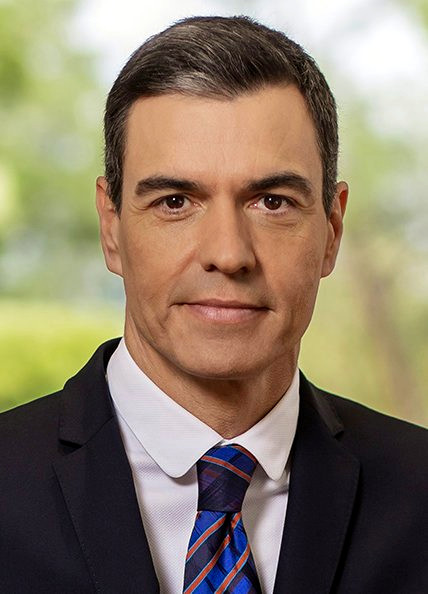 Respected President and Chancellor of Tsinghua University,
Professors,
Students of Tsinghua University,
Da jia hao.
It is a true honor to be in this temple of knowledge. A global reference in teaching and research. A place where human beings explore the limits of science and our imagination. And where we also find, at those limits, new ways of cooperating and of prospering.
Allow me to begin by speaking precisely about that: about science, and also about imagination. With a story that took place not far from here, more than four centuries ago.
In 1583, an Italian Jesuit named Matteo Ricci arrived in China. In his austere luggage, he carried several books, an astrolabe, and a map of the world.
It was a European map. Correct in its proportions, highly advanced in its level of detail, but biased in its perspective. Because what it did was show the world as the West saw it: with Europe at the center and Asia on its right margin. At the ends of the earth. Upon seeing it, the cartographers of the imperial court asked the Jesuit why China appeared at that far edge of the map. And the European scholar understood for the first time that the Mediterranean Sea was the center of his world, but not of others’. Every world had its own center, and so Matteo Ricci remade his map entirely. This time, using the Pacific Ocean as its axis and capturing within it the entire Eurasian continent.
More than 400 years have passed since then — more than 400 years. And yet there are still, unfortunately, people who continue to see the world as it appeared in that first map, distorted by Ricci. I say distorted because I know the world was not like that. I know that in the year 1583, China was already a great power representing one quarter of the world’s population and global GDP. That it traded with half the planet. And that it led science and technology in many fields.
I know this because at that time, Spain — as the University President has kindly reminded us — was also a great empire. An empire that exchanged raw materials and manufactured goods with the Ming Dynasty through the Manila corridor. And that crossed the oceans with magnetic compasses, muskets, and sternpost rudders — all technologies of Chinese origin.
The Spain of that era knew of China’s greatness. It knew that Beijing was not on the periphery of the world, but was one of its centers.
And present-day Spain knows this too. It knows that China is rebuilding its greatness. That it is already the world’s leading exporter of goods and fourth in services. That its industry and science are transforming the fight against global warming and reducing poverty. And that, as such, China is called to play an essential role in the future of the world.
That is why, for me, dear President, professors, it is a genuine honor to address this center of thought as a Spaniard, and also as a European.
There are those who insist on interpreting reality in zero-sum terms. On narrating the growth of some as a loss for the rest. Or on arguing that deepening certain relationships implies renouncing others.
But I believe this reading is not only wrong. It is also dangerous, because it is paralyzing. Because it makes us prisoners of the past and limits the possibilities the future offers us. Because it falls into the error of assuming that the world we see — the world of old maps — is the only possible world.
In my view, what is happening today is not a transfer of hegemonies. It is a multiplication of poles — not only of power, but also of prosperity. And this is wonderful news for Europe. Because for the first time in contemporary history, progress is germinating simultaneously in many places across the planet. Places, moreover, that do not resemble one another. That do not share the same culture. Nor the same political system, nor the same social conditions. And that do not need to ask anyone’s permission to grow. This is happening here in China, in Asia. But also on the African continent, and in a region very close to Spain: Latin America.
The multipolarity I describe is not a hypothesis. It is not a wish either. It is already a reality. The new reality in which the world lives. And therefore we must accept it. We cannot change it. We can only choose between denying it or embracing it.
And the Government of Spain — all of Spanish society — chooses to embrace it. It does so from realism, also from pragmatism, and without any doubt from responsibility. But I would like to underscore that we do so also from hope. Because we believe that if Spain, Europe, and China were able to prosper together in the past, there are no reasons to think we cannot do so again.
Evidently, it will not be easy. We know that. There are matters that also divide us. Issues on which we do not share the same view. In which we compete. Where we also disagree. Points on which we will not agree — perhaps we will never manage to agree.
But humanity advances when we build upon what unites us. Not when we deepen the trenches that divide us. With that spirit we work from Spain with many other countries — Brazil, India, South Africa, Mexico. And of course also in our relations with China.
Spain’s proposal, therefore, is clear: to build a relationship based on mutual respect. A respect that allows us, among other things, to cooperate in every possible domain. To compete where necessary. And to manage our differences when they are unavoidable.
And Spain defends this same vision everywhere in the world and in every capital. It does so in Madrid, our capital. In Brussels, the capital of Europe. And it does so in the rest of the world in the same way.
But for that vision to work, and for the world to prosper under the new multipolar order, we will need three very important things in the months and years ahead. Three elements I would like to share with all of you.
The first is that efficient multipolarity is not possible without a strengthened multilateralism.
There are those who believe the multilateral system is dead. We are seeing, unfortunately, many cases in the media — crises, wars taking place in the world. They think that indeed, this multilateral world is dead, that it belongs to the past. And I want to say here that I deeply disagree with that analysis. And I do so forcefully.
I believe that the instruments of global governance functioned in the twentieth century and are more necessary today than ever. That rules and cross-border cooperation are the only tools that will allow humanity to overcome the climate emergency and the other challenges of this era.
I believe the multipolar world needs a robust multilateral system — not to impose a single vision, but to turn the crucible of our perspectives into a strength for all of humanity. Not to eliminate our differences, but to deal with them peacefully and with respect.
Because multipolarity without rules leads to rivalry, and from rivalry only wars, trade conflicts, and ruin arise.
That is why Spain calls for a profound renewal of the multilateral architecture. We must make it more efficient, more transparent, more accountable, and also more inclusive and plural.
Because if multilateralism wishes to remain useful, it must change and better reflect the balances of power and the sensibilities of today’s world. We cannot allow the past to suffocate the future of multilateral bodies.
This is why I believe the West must relinquish part of its share of representation in favor of global stability and the trust of countries in the Global South.
This is why I believe we must transform the United Nations as soon as possible — with a much stronger General Assembly, a more representative Security Council, and a more democratic decision-making system in which all regions truly have a voice and a vote, and middle powers can also play a unifying and harmonizing role, which is what is expected of them.
And from Spain we also believe it would be fitting that, for the first time in history, a woman should lead the United Nations Secretariat.
The second element I wish to share with you is that this new multipolar order must function with trade relations that are balanced and reciprocal. We cannot move from the imbalances of the twentieth century to different ones in the twenty-first.
For that development to be stable, sustainable, and healthy, the multipolar order will need a more horizontal and fairer economy — one in which there are no losing regions and winning ones, but truly global supply chains that create employment and wealth at every latitude of the planet and share negative externalities proportionately.
Why do I say this? Because the European Union is doing its part. One can debate whether it does so quickly enough or slowly, with difficulties — certainly, I acknowledge that — but it is doing its part.
In the last decade alone, we have signed trade agreements with 25 countries. We have increased our imports from the so-called Global South by 80%, and we have created more than 25 million jobs annually outside our borders.
We need China to do the same. To open up, so that Europe does not have to close down. To help us correct the current trade deficit we have with it.
A deficit that is not balanced — one that grew again by 18% just last year — and that is unsustainable for our societies in the medium and long term. It is unsustainable because of the isolationist movements it fuels and the grievances and social hardship it causes. To give you a sense of scale: our trade deficit with China already represents 74% of our country’s total deficit.
I therefore believe it is important that we correct this, that we cooperate, and that we jointly build a globalized, balanced economy that generates shared prosperity.
The third element we will need for the multipolar order to function is greater engagement by the major and middle powers in managing and providing what academics call global public goods — for example, the fight against climate change, security, defense, and the struggle against inequality.
In short, emerging powers and established powers alike must provide these global public goods.
Size implies not only power, but also a responsibility that cannot be delegated. Because the great problems of the twenty-first century do not require visas — they cross borders and belong to all of us.
I think, for example, of the fight against climate change, or the challenges posed by global health, the development of responsible artificial intelligence, nuclear arms control, the eradication of poverty, and the safeguarding — as I mentioned — of global health. These are areas in which funding has fallen by 23% in just the past year — 23%.
Without the collaboration of the great powers, and of course China, these objectives are not merely difficult — they are simply unachievable. I know China is fully aware of this and is doing a great deal, and I welcome that. But I believe China can do more. For example, by demanding — as it is already doing — that international law be respected and that the conflicts in Lebanon, Iran, Gaza, the West Bank, and also Ukraine come to an end. Because international law is the foundation of everything. By sharing its technology with the most disadvantaged countries. By canceling debt and contributing to the financing of the system through participation in debt-swap mechanisms.
Naturally, Europe will also have to redouble its efforts, especially now that the United States has decided to withdraw from many of these fronts. Europe’s contribution is and will be essential. I therefore humbly ask that you see it in the same light — that you do not fall into Matteo Ricci’s error and allow yourselves to be deceived by maps.
Because Europe may appear small on a world map, but in reality it is quite the opposite. The figures are these: the European Union is at this moment the world’s largest trading bloc and the second largest economy. It is also the top recipient of foreign direct investment. It is the second most innovative ecosystem. It has a highly qualified workforce. It is the second most productive economy on the planet and the first in levels of life satisfaction, social cohesion, and wellbeing.
I do not say this to boast, nor to conceal our many shortcomings — of which we have plenty. What I wish to say is that Europe is a key actor in the stability, prosperity, and peace of the world, and that without a united Europe — and therefore without a fragmented one — there can be no stable international order and no prosperous future for humanity. Nor can there be one without the participation of this great country, China. That is why we are called to understand one another and to cooperate.
Dear professors and students, let me now conclude.
Four centuries after Matteo Ricci arrived in China and had to correct his map, humanity is still searching for the most accurate angle from which to see the world as it truly is — not as power or prejudice dictates.
A few days ago, four American astronauts traveled farther from the Earth than any human being has ever done. And from there, they obtained perhaps that angle. From there, they saw the Earth for what it truly is: a sphere with no edges and no borders.
A unique, unrepeatable blue sphere, in the most hostile environment to life that could possibly exist. We human beings are the result of that miracle. Perhaps the only such miracle in the universe. And therefore our duty is to understand one another and to cooperate so that this miracle may continue to flourish.
Thank you very much. Xie xie.
Il discorso del Primo Ministro Pedro Sánchez a Tsinghua,
da Kaiser Y Kuo, su SINICA [1]
Università Tsinghua, Pechino, 13 aprile 2026
Stimato Presidente e Cancelliere dell’Università Tsinghua,
Professori,
Studenti dell’Università Tsinghua,
Un saluto a tutti (Da jia hao).
È un vero onore trovarsi in questo tempio del sapere. Un punto di riferimento mondiale per l’insegnamento e la ricerca. Un luogo in cui gli esseri umani esplorano i limiti della scienza e della nostra immaginazione. E dove, proprio a questi limiti, troviamo nuove forme di cooperazione e di prosperità.
Permettetemi di cominciare parlando proprio di questo: di scienza, e anche di immaginazione. Con una storia che si è svolta non lontano da qui, più di quattro secoli fa.
Nel 1583, un gesuita italiano di nome Matteo Ricci arrivò in Cina. Nel suo austero bagaglio portava diversi libri, un astrolabio e una mappa del mondo.
Era una mappa europea. Corretta nelle proporzioni, estremamente dettagliata, ma distorta nella prospettiva. Perché mostrava il mondo come lo vedeva l’Occidente: con l’Europa al centro e l’Asia sul margine destro. Ai confini del mondo. Vedendola, i cartografi della corte imperiale chiesero al gesuita perché la Cina apparisse a quel limite estremo della mappa. E lo studioso europeo comprese per la prima volta che il Mar Mediterraneo era il centro del suo mondo, ma non di quello degli altri. Ogni mondo aveva il suo centro, e così Matteo Ricci rifece completamente la sua mappa. Questa volta, usando l’Oceano Pacifico come asse e includendovi l’intero continente eurasiatico.
Sono trascorsi più di 400 anni da allora, più di 400 anni. Eppure, purtroppo, ci sono ancora persone che continuano a vedere il mondo come appariva in quella prima mappa, distorta da Ricci. Dico distorta perché so che il mondo non era così. So che nel 1583 la Cina era già una grande potenza, rappresentando un quarto della popolazione mondiale e del PIL globale. Che commerciava con metà del pianeta. E che era all’avanguardia nella scienza e nella tecnologia in molti campi.
Lo so perché a quell’epoca la Spagna – come ci ha gentilmente ricordato il Rettore dell’Università – era anch’essa un grande impero. Un impero che commerciava materie prime e manufatti con la dinastia Ming attraverso il corridoio di Manila. E che attraversava gli oceani con bussole magnetiche, moschetti e timoni di poppa: tutte tecnologie di origine cinese.
La Spagna di quell’epoca era consapevole della grandezza della Cina. Sapeva che Pechino non si trovava alla periferia del mondo, ma ne era uno dei centri.
E anche la Spagna di oggi lo sa. Sa che la Cina sta ricostruendo la sua grandezza. Che è già il primo esportatore mondiale di beni e il quarto per i servizi. Che la sua industria e la sua scienza stanno trasformando la lotta contro il riscaldamento globale e la riduzione della povertà. E che, in quanto tale, la Cina è chiamata a svolgere un ruolo essenziale nel futuro del mondo.
Ecco perché, per me, caro Presidente, professori, è un vero onore rivolgermi a questo centro di pensiero in qualità di spagnolo e anche di europeo.
C’è chi insiste nell’interpretare la realtà in termini di somma zero. Nel narrare la crescita di alcuni come una perdita per gli altri. O nel sostenere che approfondire certe relazioni implichi rinunciare ad altre.
Ma credo che questa interpretazione non sia solo errata. È anche pericolosa, perché paralizza. Perché ci rende prigionieri del passato e limita le possibilità che il futuro ci offre. Perché cade nell’errore di presumere che il mondo che vediamo – il mondo delle vecchie mappe – sia l’unico mondo possibile.
A mio avviso, ciò che sta accadendo oggi non è un trasferimento di egemonie. È una moltiplicazione di poli, non solo di potere, ma anche di prosperità. E questa è una notizia meravigliosa per l’Europa. Perché per la prima volta nella storia contemporanea, il progresso sta germogliando simultaneamente in molti luoghi del pianeta. Luoghi, peraltro, che non si assomigliano tra loro. Che non condividono la stessa cultura. Né lo stesso sistema politico, né le stesse condizioni sociali. E che non hanno bisogno del permesso di nessuno per crescere. Questo sta accadendo qui in Cina, in Asia. Ma anche nel continente africano e in una regione molto vicina alla Spagna: l’America Latina.
La multipolarità che descrivo non è un’ipotesi. Non è nemmeno un desiderio. È già una realtà. La nuova realtà in cui vive il mondo. E quindi dobbiamo accettarla. Non possiamo cambiarla. Possiamo solo scegliere tra negarla o accoglierla.
E il Governo spagnolo – e l’intera società spagnola – sceglie di accoglierlo. Lo fa per realismo, per pragmatismo e, senza dubbio, per senso di responsabilità. Ma vorrei sottolineare che lo facciamo anche per speranza. Perché crediamo che se la Spagna, l’Europa e la Cina sono state in grado di prosperare insieme in passato, non ci sono motivi per pensare che non possiamo farlo di nuovo.
Evidentemente non sarà facile. Lo sappiamo. Ci sono anche questioni che ci dividono. Questioni su cui non condividiamo la stessa opinione. Su cui competiamo. Dove siamo in disaccordo. Punti su cui non riusciremo a trovare un accordo, forse non ci riusciremo mai.
Ma l’umanità progredisce quando costruiamo su ciò che ci unisce, non quando approfondiamo i fossati che ci dividono. Con questo spirito lavoriamo dalla Spagna con molti altri Paesi: Brasile, India, Sudafrica, Messico. E naturalmente anche nei nostri rapporti con la Cina.
La proposta della Spagna, dunque, è chiara: costruire una relazione basata sul rispetto reciproco. Un rispetto che ci permetta, tra l’altro, di cooperare in ogni ambito possibile, di competere quando necessario e di gestire le divergenze quando inevitabili.
E la Spagna difende questa stessa visione ovunque nel mondo e in ogni capitale. Lo fa a Madrid, la nostra capitale. A Bruxelles, la capitale d’Europa. E lo fa allo stesso modo nel resto del mondo.
Ma affinché questa visione si realizzi e il mondo prosperi nel nuovo ordine multipolare, nei mesi e negli anni a venire avremo bisogno di tre cose molto importanti. Tre elementi che vorrei condividere con tutti voi.
Il primo punto è che una multipolarità efficace non è possibile senza un multilateralismo rafforzato.
C’è chi crede che il sistema multilaterale sia morto. Purtroppo, ne vediamo molti esempi sui media – crisi, guerre in corso nel mondo – che confermano questa convinzione. Credono che il mondo multilaterale sia davvero morto, che appartenga al passato. Voglio dire qui che sono profondamente in disaccordo con questa analisi. E lo dico con forza.
Credo che gli strumenti di governance globale abbiano funzionato nel ventesimo secolo e siano oggi più necessari che mai. Credo che le regole e la cooperazione transfrontaliera siano gli unici strumenti che permetteranno all’umanità di superare l’emergenza climatica e le altre sfide di quest’epoca.
Credo che il mondo multipolare abbia bisogno di un solido sistema multilaterale, non per imporre un’unica visione, ma per trasformare il crogiolo delle nostre prospettive in una forza per tutta l’umanità. Non per eliminare le nostre differenze, ma per affrontarle pacificamente e con rispetto.
Perché la multipolarità senza regole porta alla rivalità, e dalla rivalità nascono solo guerre, conflitti commerciali e rovina.
Per questo la Spagna chiede un profondo rinnovamento dell’architettura multilaterale. Dobbiamo renderla più efficiente, più trasparente, più responsabile, ma anche più inclusiva e plurale.
Perché se il multilateralismo vuole rimanere utile, deve cambiare e riflettere meglio gli equilibri di potere e la sensibilità del mondo odierno. Non possiamo permettere che il passato soffochi il futuro degli organismi multilaterali.
Per questo credo che l’Occidente debba rinunciare a parte della sua rappresentanza in favore della stabilità globale e della fiducia dei paesi del Sud del mondo.
Per questo credo che dobbiamo trasformare le Nazioni Unite il prima possibile, con un’Assemblea Generale molto più forte, un Consiglio di Sicurezza più rappresentativo e un sistema decisionale più democratico in cui tutte le regioni abbiano veramente voce in capitolo e diritto di voto, e in cui anche le potenze di medio livello possano svolgere un ruolo unificante e armonizzante, come ci si aspetta da loro.
Anche noi, dalla Spagna, riteniamo opportuno che, per la prima volta nella storia, una donna guidi il Segretariato delle Nazioni Unite.
Il secondo elemento che desidero condividere con voi è che questo nuovo ordine multipolare deve funzionare con relazioni commerciali equilibrate e reciproche. Non possiamo passare dagli squilibri del ventesimo secolo a squilibri diversi nel ventunesimo.
Affinché tale sviluppo sia stabile, sostenibile e sano, l’ordine multipolare avrà bisogno di un’economia più orizzontale ed equa, in cui non esistano regioni vincenti e perdenti, ma catene di approvvigionamento realmente globali che creino occupazione e ricchezza a ogni latitudine del pianeta e condividano proporzionalmente le esternalità negative.
Perché dico questo? Perché l’Unione Europea sta facendo la sua parte. Si può discutere se lo stia facendo con sufficiente rapidità o lentamente, con difficoltà – lo riconosco, certo – ma sta facendo la sua parte.
Solo nell’ultimo decennio abbiamo firmato accordi commerciali con 25 paesi. Abbiamo aumentato le nostre importazioni dal cosiddetto Sud globale dell’80% e abbiamo creato oltre 25 milioni di posti di lavoro all’anno al di fuori dei nostri confini.
Abbiamo bisogno che anche la Cina faccia lo stesso. Che si apra, in modo che l’Europa non debba chiudersi. Che ci aiuti a correggere l’attuale deficit commerciale che abbiamo con essa.
Un deficit non bilanciato – che è cresciuto del 18% solo l’anno scorso – e che è insostenibile per le nostre società nel medio e lungo termine. È insostenibile a causa dei movimenti isolazionisti che alimenta e del malcontento e delle difficoltà sociali che provoca. Per darvi un’idea della portata del problema: il nostro deficit commerciale con la Cina rappresenta già il 74% del deficit totale del nostro Paese.
Ritengo pertanto importante correggere questa situazione, cooperare e costruire insieme un’economia globalizzata ed equilibrata che generi prosperità condivisa.
Il terzo elemento necessario affinché l’ordine multipolare funzioni è un maggiore impegno da parte delle grandi e medie potenze nella gestione e nella fornitura di quelli che gli accademici chiamano beni pubblici globali, come ad esempio la lotta contro il cambiamento climatico, la sicurezza, la difesa e la lotta contro la disuguaglianza.
In sintesi, sia le potenze emergenti che quelle consolidate devono fornire questi beni pubblici globali.
Le dimensioni implicano non solo potere, ma anche una responsabilità che non può essere delegata. Perché i grandi problemi del ventunesimo secolo non richiedono visti: oltrepassano i confini e appartengono a tutti noi.
Penso, ad esempio, alla lotta contro il cambiamento climatico, o alle sfide poste dalla salute globale, allo sviluppo di un’intelligenza artificiale responsabile, al controllo degli armamenti nucleari, all’eliminazione della povertà e alla salvaguardia – come ho già detto – della salute globale. Si tratta di settori in cui i finanziamenti sono diminuiti del 23% solo nell’ultimo anno: del 23%.
Senza la collaborazione delle grandi potenze, e naturalmente della Cina, questi obiettivi non sono solo difficili, ma semplicemente irraggiungibili. So che la Cina ne è pienamente consapevole e sta facendo molto, e lo apprezzo. Ma credo che la Cina possa fare di più. Ad esempio, esigendo – come già fa – che il diritto internazionale venga rispettato e che i conflitti in Libano, Iran, Gaza, Cisgiordania e Ucraina giungano al termine. Perché il diritto internazionale è il fondamento di tutto. Condividendo la sua tecnologia con i paesi più svantaggiati. Cancellando il debito e contribuendo al finanziamento del sistema attraverso la partecipazione a meccanismi di conversione del debito.
Naturalmente, anche l’Europa dovrà raddoppiare gli sforzi, soprattutto ora che gli Stati Uniti hanno deciso di ritirarsi da molti di questi fronti. Il contributo dell’Europa è e sarà essenziale. Vi chiedo quindi umilmente di considerarlo allo stesso modo, di non cadere nell’errore di Matteo Ricci e di non lasciarvi ingannare dalle mappe.
Perché l’Europa può sembrare piccola su una mappa del mondo, ma in realtà è tutt’altro. I dati parlano chiaro: l’Unione Europea è attualmente il più grande blocco commerciale al mondo e la seconda economia più grande. È anche il principale destinatario di investimenti diretti esteri. È il secondo ecosistema più innovativo. Ha una forza lavoro altamente qualificata. È la seconda economia più produttiva del pianeta e la prima per livelli di soddisfazione di vita, coesione sociale e benessere.
Non dico questo per vantarmi, né per nascondere le nostre numerose mancanze – di cui ne abbiamo in abbondanza. Ciò che desidero affermare è che l’Europa è un attore chiave per la stabilità, la prosperità e la pace del mondo, e che senza un’Europa unita – e quindi senza un’Europa frammentata – non può esserci un ordine internazionale stabile né un futuro prospero per l’umanità. Né può esserci senza la partecipazione di questo grande Paese, la Cina. Per questo siamo chiamati a comprenderci reciprocamente e a cooperare.
Cari professori e studenti, permettetemi ora di concludere.
Quattro secoli dopo l’arrivo di Matteo Ricci in Cina e la conseguente necessità di correggere la sua mappa, l’umanità è ancora alla ricerca del punto di vista più accurato per osservare il mondo così com’è realmente, e non come dettato dal potere o dal pregiudizio.
Qualche giorno fa, quattro astronauti americani si sono spinti più lontano dalla Terra di quanto qualsiasi altro essere umano abbia mai fatto. E da lì, hanno forse ottenuto quella prospettiva. Da lì, hanno visto la Terra per quello che è veramente: una sfera senza bordi e senza confini.
Una sfera blu unica e irripetibile, nell’ambiente più ostile alla vita che si possa immaginare. Noi esseri umani siamo il risultato di questo miracolo. Forse l’unico miracolo di questo tipo nell’universo. E perciò il nostro dovere è comprenderci a vicenda e cooperare affinché questo miracolo possa continuare a prosperare.
Grazie mille (Xie xie).
[1] Trovo il discorso di Sanchez sulla piattaforma di Sinica, proposto con una introduzione entusiastica di Kaiser Y Kuo, direttore e fondatore di Sinica. Kaiser definisce in discorso di Pedro Sanchez “Una lezione magistrale di retorica diplomatica”, in particolare mettendo in evidenza la genialità delle riferimenti iniziali e finali alla carta geografica con la quale il gesuita italiano Matteo Ricci – arrivò in Cina nel 1583. Una mappa che – nella sua versione originale – era eurocentrica, ma che lo studioso italiano comprese facilmente essere errata. I cartografi cinesi gli chiesero per quale ragione la Cina ‘apparisse al limite estremo della mappa’, e Ricci comprese che semplicemente ogni mondo aveva un suo centro; la rielaborò usando l’Oceano Pacifico come asse e includendovi l’intero continente euroasiatico.
Il discorso di Sanchez è una lezione di un europeo, che non rinuncia alle critiche possibili da parte di un europeo, che si sforza di ricordare i pur timidi progressi europei, che sollecita la Cina a farsi maggiormente carico dei problemi aperti in una prospettiva multipolare. Ma la necessità di cambiare quella mappa originaria di Matteo Ricci, è semplicemente inimmaginabile per la Meloni e le destre del mondo.
By mm
E' possibile commentare l'articolo nell'area "Commenti del Mese"