


Altri Economisti » Saggi in evidenza » Saggi, articoli su riviste. Krugman ed altri » Selezione del Mese
Lezioni per l’Iran dalla guerra di Corea (una utile narrazione della ‘dimenticata’ Guerra di Corea). Di HUA BIN (dal substack di Hua Bin, 14 giugno 2026)
Jun 14, 2026
Lessons for Iran from the Korean War
 The Iran War is in a stalemate. Maybe a “deal” will be reached. Maybe not. Maybe fighting will break out again soon. Then maybe not.
After all, we are dealing with a fickle TACO in the White House. Who may or may not suffer from cognitive and mental deficiency.
Since it’s impossible to guess what’s on Trump’s mind, perhaps we can look back at history to find some patterns and lessons.
A good example, at least for the Chinese, is the Korean War, which is aptly described as the “forgotten war” by the Americans. One wonders why.
For the Chinese, it is remembered as the watershed war after the founding of the People’s Republic. It is a defining moment of military victory and national rejuvenation.
It is the first time in history someone has defeated the advances of the mighty US military and fought it to a standstill.
After the war, China became the 3rd center of global power, after the US and USSR, despite its lagging economy and crushing poverty. The world knew China wouldn’t be pushed around.
What happened in the war and how the two sides negotiated the armistice are highly relevant for the Iran War today.
So are the strategic consequences.
The Korean War
The Korean War broke out on June 25, 1950, when North Korean forces crossed the 38th parallel to invade South Korea for national reunification.
North Korea was initially successful and captured most of South Korea quickly, including the capital city of Seoul.
However, the US came to South Korea’s rescue with the landing of US-led UN forces in Incheon on September 15, 1950.
This surprise amphibious invasion was officially called Operation Chromite. It was planned by US General Douglas MacArthur.
The successful operation turned the tide by cutting off North Korean supply lines and allowing the US-led forces to recapture Seoul.
By October 1950, UN forces under General MacArthur had crossed the 38th parallel and were rapidly advancing northward.
American and South Korean troops entered Pyongyang on October 19, 1950, and some troops even reached the Yalu River by late October 1950. That is the border river between Korea and China.
The war North Korea launched was blessed by Joseph Stalin but without consultation with China. Chairman Mao and the Chinese leadership had intense debates whether to intervene.
On one hand, North Korea was a member of the Communist bloc and shares a land border with China. Its defeat would leave China exposed directly under US military threat.
On the other hand, the new People’s Republic was just established in October 1949 after 8 years of brutal war against Japanese invasion and 4 years civil war, which wasn’t finished yet after Chiang Kai-shek fled to Taiwan.
The country lost between 20 to 25 million people during the war with Japan.
It was depleted economically and impoverished with its economy accounting for less than 3% of the US GDP. Per capital GDP was less than 1% of the US.
The new republic had no air force, no navy, and no armored ground forces. Its military was basically a light infantry force.
In contrast, the US was at its post-WW2 peak of global power – its economy was roughly 50% global GDP. It had the war’s most powerful and advanced military. It had nuclear weapons.
When the US forces reached Yalu River, they bombed Chinese fishing boats as well as Chinese villages.
This advance directly threatened China’s national security and prompted Chairman Mao’s decision to intervene.
The Chinese People’s Volunteer Army, led by Marshal Peng Dehuai, crossed the Yalu River on October 19, 1950, to defend North Korea and push American forces back.
China deployed approximately 260,000 troops in complete secrecy, marching at night and hiding during daylight to avoid aerial detection.
Marshal Peng allowed US forces to advance northward while Chinese forces took up concealed positions in the mountainous terrain.
On October 25, Chinese forces launched their first attacks against South Korean units in the Unsan area. The South Korean 6th Division was destroyed.
Between November 25 and December 24, 1950, Chinese forces launched a massive offensive that sent UN forces into full retreat, recapturing Pyongyang.
This was the famous “Chosin Reservoir” campaign and the most critical campaign during the war.
At this start of this campaign, General MacArthur, still underestimating Chinese strength, launched his “Home by Christmas” offensive on November 24, 1950.
UN forces advanced in two main columns: the Eighth Army in the west and the X Corps in the east.
Peng Dehuai had massed approximately 380,000 Chinese troops, far more than US intelligence estimated.
The Chinese strategy was to attack the weaker South Korean units first, create gaps in the UN line, then pour through to envelop American forces.
In the west, the Chinese 38th and 42nd Armies struck the South Korean 2nd Corps on November 25, shattering it within hours.
This created a massive gap in the UN line. Chinese forces then turned westward to hit the American Eighth Army’s flank.
The American 2nd Infantry Division suffered heavy casualties trying to withdraw through a narrow pass called “The Gauntlet.” Turkish forces sent to plug the gap were overrun.
In the east, the most famous battle occurred at the Chosin Reservoir.
The Chinese 9th Army Group, approximately 120,000 troops from units accustomed to China’s southern warm climate, attacked the US 1st Marine Division and elements of the 7th Infantry Division in subzero temperatures that reached minus 30 degrees Fahrenheit.
The Marines fought their way out in a fighting withdrawal to the port of Hungnam, but the Chinese 9th Army was virtually destroyed as an effective fighting force, suffering an estimated 30,000 casualties from combat and cold. Thousands were frozen to death.
Despite the heavy Chinese losses in the east, the overall strategic result was decisive.
UN forces were in full retreat by early December. General Walton Walker, commander of the Eighth Army, was killed during the withdrawal.
Pyongyang fell to Chinese and North Korean forces on December 5, 1950. By December 24, UN forces had withdrawn south of the 38th parallel.
Chinese and North Korean forces captured Seoul on January 4, 1951.
Subsequently, US forces under General Matthew Ridgway launched Operation Thunderbolt and Operation Killer, pushing Chinese forces back northward.
By late March 1951, UN forces had recaptured Seoul and reached the 38th parallel.
After this campaign, the front stabilized roughly along the 38th parallel, the original dividing line between north and south Korea, where it remained until the armistice in 1953.
During the 3 years, the Truman and Eisenhower administrations faced growing domestic pressure to limit the war due to the high American casualties.
Eventually, over 36,000 US soldiers were killed in Korea. China lost over 180,000. Between 2 to 3 million Koreans, mostly civilians, died in the war, accounting for 10% of the pre-war total population.
MacArthur’s defeat and advocacy for expanding the war into China led to his dismissal in April 1951.
The negotiations
The Korean War, from China’s perspective, lasted approximately two years and nine months.
The Chinese People’s Volunteer Army crossed the Yalu River on October 19, 1950, and the war concluded with the signing of the Korean Armistice Agreement on July 27, 1953.
The armistice negotiations were extraordinarily prolonged, lasting two years and seventeen days, or roughly 747 days, from July 10, 1951, to July 27, 1953.
Premier Zhou Enlai once summarized this period: “We fought for three years in Korea and negotiated for two.”
The negotiation process was fraught with interruptions. Talks were suspended for 63 days when the American side bombed the Chinese and North Korean delegation’s quarters in August 1951.
Trying to kill the other side’s negotiators is not an Israeli invention.
The venue changed twice, moving from Kaesong to Panmunjom.
Throughout this period, there were 5 major suspensions of talks, 58 full delegation meetings, and 733 smaller sessions.
The fundamental reason for this extraordinary delay was that the US could not accept a stalemate.
American negotiators repeatedly made unreasonable demands, such as requiring Chinese and North Korean forces to withdraw 38 to 68 kilometers to “compensate” for American air and naval superiority.
Simultaneously, they launched major military offensives including the Summer Offensive, Autumn Offensive, and Operation Strangle to exert military pressure on the negotiating table.
It was only in 1953, when the US realized it could gain no advantage either on the battlefield or at the negotiating table, that it finally agreed to sign the armistice.
The most famous and brutal battle during the negotiations was the Battle of Shangganling, fought from October 14 to November 25, 1952.
American forces committed over 60,000 troops, more than 300 artillery pieces, over 170 tanks, and 3,000 aircraft sorties, firing over 1.9 million shells.
Both sides contested two hill positions covering just 3.7 square kilometers. The hilltops were blasted down by two meters, rock pulverized into powder.
Chinese volunteer soldiers held their positions for 43 days. The American side suffered over 25,000 casualties and was forced to halt its offensive.
This battle utterly destroyed American hopes for a breakthrough and significantly softened the American negotiating position.
After Shangganling, American negotiators no longer pressed their unreasonable demands.
The battle established both China’s national prestige and military credibility, and more importantly, it secured the initiative at the negotiating table.
The final major engagement was the Jincheng Campaign, fought from July 13 to July 27, 1953.
By this point, negotiations were nearing agreement. However, South Korean President Syngman Rhee suddenly sabotaged the process by forcibly detaining North Korean prisoners of war in an attempt to derail the armistice.
Sound familiar with what’s happening in Lebanon?
Chinese volunteer forces launched the Jincheng Campaign to strike a severe blow against South Korean forces.
They broke through South Korean defensive lines, eliminated over 53,000 enemy troops, recovered 148 square kilometers of territory, and compelled the US to restrain Syngman Rhee.
The victory directly facilitated the final signing of the armistice agreement on July 27, 1953.
Other notable operations included the Operation Strangle, where Chinese forces resisted an American biological warfare, during which the US, in violations of international conventions, dropped biological weapons over North Korea and Northeast China in 1953.
These battles collectively embodied the Chinese strategic principle of promoting talks through fighting.
The victory on the battlefield earned China equality at the negotiating table. Without these military successes, there would have been no armistice agreement in 1953.
The strategic outcome
Despite heavy losses, the Chinese intervention achieved its core strategic objectives.
What began as an American advance to the Yalu River was transformed into a stalemate at the 38th parallel.
China preserved North Korea as a buffer state, preventing American forces from reaching the Chinese border.
Furthermore, China became the 3rd center of global power besides the US and USSR after the war.
Before the war, China was considered a Soviet satellite or a regional footnote by the US and much of the world.
Yet it delivered the first real military defeat of the US in its history. The war transformed how the world understood China.
Although China was still a member in the Soviet bloc, it became an independent sovereign that cannot be pushed around by anyone.
Chairman Mao famously told his colleagues in the discussion whether to intervene that “the intervention is to prevent a hundred punches coming your way by throwing one punch at your enemy” (打得一拳开,免得百拳来).
The war perfectly achieved that goal. China earned a reputation and respect that a nation can only acquire on the battlefield.
This directly led to a window of decades of peaceful development without external threats.
So, the question now is “will Iran rise to become the 4th center of power besides China, the US, and Russia after the 2026 war?”
I think it is very likely.
Lessons for Iran
Iran needs to understand the structural patterns of bad faith in American foreign policy.
The historical pattern of fighting while negotiating, and the apparent willingness to break commitments, reflects deeper structural characteristics of American foreign policy rather than isolated incidents.
Both Truman and Eisenhower administrations pursued opportunistic attacks while negotiations were ongoing and “ceasefire” was officially in place.
The Iran nuclear agreement negotiated under President Obama was unilaterally abandoned by Trump, who launched surprise attacks on Iran during “negotiations” – twice, in 2025 and 2026.
The Trump regime continues to violate the temporary ceasefire reached in early April. So does its partner in crime – Israel.
International agreements lack institutional constraints on the American executive.
American foreign policy discourse is saturated with references to a rules-based international order, yet American practice exempts itself from those rules.
The paradox is that America is both the primary architect of international rules and its most frequent violator.
This American exceptionalism, the belief that America’s special character places it above ordinary constraints, enables this systematic self-exemption.
Trump’s foreign policy style has amplified these characteristics to an extreme degree, embodying a transactional approach to international relations.
In this framework, all international relationships are “deals”, and all commitments are bargaining chips.
Concessions made in negotiations can be withdrawn the moment they are deemed unfavorable or when a display of toughness is politically expedient.
The 2026 strike against Iran reflects transactional thinking at its purest: using military pressure to improve negotiating position, or using negotiations as cover for military aggression.
The deep ideological root of the US foreign policy is hegemony, the conviction that American interests are above those of other nations and there is no equal nation state with the US.
This ideology produces two consequences. First, it creates unlimited objectives. There is no standard of “good enough.”
The goal is always to fundamentally transform the other party’s regime or behavior – i.e. to yield to the US.
Second, it instrumentalizes all means. Negotiations, agreements, and international law are merely tools to achieve objectives, not constraints with intrinsic value.
Fundamentally, it reflects the combination of hegemonic ideology with exceptionalist self-perception, making it difficult for America to genuinely accept a framework of equal and mutual benefits.
This stands in sharp contrast to China’s negotiating position during the Korean War.
Chinese objectives were clear and limited: an armistice along the thirty-eighth parallel, without seeking to occupy South Korea or overthrow the Syngman Rhee regime.
This clarity of bottom-line produced consistency in negotiation.
The American side constantly shifted its demands, unwilling to accept a draw and always seeking through negotiations to obtain what it could not win on the battlefield.
The 2026 decapitation strike against Iran represents the latest manifestation of this logic: launching war while negotiations are ongoing, substituting assassination for diplomacy, and replacing multilateral rules with unilateral hegemonic action.
During the Korean War, America at least maintained the façade of multilateral framework of UN forces and the mechanism of armistice negotiations.
The 2026 Iran War represents naked hegemonic unilateralism, abandoning even the pretence of international law.
This signals a transition from hegemony constrained by rules to unconstrained domination.
History teaches us when a nation deals with a bully and a hegemonic power, you don’t back down. You fight. And fight some more.
The only way to get the hegemon to the negotiating table is to give it a bloody nose, preferably a broken one.
Lezioni per l’Iran dalla guerra di Corea (una utile narrazione della ‘dimenticata’ Guerra di Corea).
La guerra con l’Iran è in una fase di stallo. Forse si raggiungerà un “accordo”. Forse no. Forse presto scoppieranno di nuovo i combattimenti. O forse no.
Dopotutto, abbiamo a che fare con un volubile TACO [1] alla Casa Bianca. Che potrebbe o meno soffrire di deficit cognitivi e mentali.
Visto che è impossibile indovinare cosa stia pensando Trump, forse possiamo guardare alla storia per trovare degli schemi e degli insegnamenti.
Un buon esempio, almeno per i cinesi, è la guerra di Corea, che gli americani definiscono giustamente la “guerra dimenticata”. Viene da chiedersi perché.
Per i cinesi, è ricordata come la guerra cruciale successiva alla fondazione della Repubblica Popolare Cinese. Rappresenta un momento decisivo di vittoria militare e rinascita nazionale.
È la prima volta nella storia che qualcuno ha respinto l’avanzata del potente esercito statunitense, riuscendo a fermarlo.
Dopo la guerra, la Cina è diventata il terzo centro di potere globale, dopo Stati Uniti e Unione Sovietica, nonostante la sua economia arretrata e la povertà schiacciante. Il mondo sapeva che la Cina non si sarebbe fatta mettere i piedi sulla testa.
Gli eventi accaduti durante la guerra e le modalità con cui le due parti hanno negoziato l’armistizio sono di grande rilevanza per la guerra con l’Iran di oggi.
Lo stesso vale per le conseguenze strategiche.
La guerra di Corea
La guerra di Corea scoppiò il 25 giugno 1950, quando le forze nordcoreane oltrepassarono il 38 ° parallelo per invadere la Corea del Sud e ottenere la riunificazione nazionale.
La Corea del Nord inizialmente ebbe successo e conquistò rapidamente gran parte della Corea del Sud, inclusa la capitale Seul.
Tuttavia, gli Stati Uniti vennero in soccorso della Corea del Sud con lo sbarco delle forze ONU a guida statunitense a Incheon il 15 settembre 1950.
Questo sbarco anfibio a sorpresa fu ufficialmente chiamato Operazione Chromite. Fu pianificato dal generale statunitense Douglas MacArthur.
L’operazione, coronata da successo, ribaltò le sorti del conflitto, interrompendo le linee di rifornimento nordcoreane e consentendo alle forze guidate dagli Stati Uniti di riconquistare Seul.
Nell’ottobre del 1950, le forze delle Nazioni Unite al comando del generale MacArthur avevano oltrepassato il 38° parallelo e stavano avanzando rapidamente verso nord.
Le truppe americane e sudcoreane entrarono a Pyongyang [2] il 19 ottobre 1950, e alcune di esse raggiunsero persino il fiume Yalu verso la fine di ottobre dello stesso anno. Si tratta del fiume di confine tra Corea e Cina.
La guerra lanciata dalla Corea del Nord fu avallata da Joseph Stalin, ma senza consultare la Cina. Il presidente Mao e la leadership cinese ebbero intensi dibattiti sull’opportunità di intervenire.
Da un lato, la Corea del Nord era membro del blocco comunista e condivideva un confine terrestre con la Cina. La sua sconfitta avrebbe esposto la Cina direttamente alla minaccia militare statunitense.
D’altro canto, la nuova Repubblica Popolare Cinese fu istituita solo nell’ottobre del 1949, dopo 8 anni di brutale guerra contro l’invasione giapponese e 4 anni di guerra civile, che non si era ancora conclusa quando Chiang Kai-shek fuggì a Taiwan.
Il Paese aveva perso tra i 20 e i 25 milioni di persone durante la guerra con il Giappone.
Era economicamente impoverito e depauperato, con un’economia che rappresentava meno del 3% del PIL degli Stati Uniti. Il PIL pro capite era inferiore all’1% di quello degli Stati Uniti.
La nuova repubblica non possedeva un’aviazione, una marina o forze terrestri corazzate. Il suo esercito era sostanzialmente costituito da fanteria leggera.
Al contrario, gli Stati Uniti erano al culmine della loro potenza globale nel dopoguerra: la loro economia rappresentava circa il 50% del PIL mondiale. Possedevano l’esercito più potente e avanzato della guerra. Avevano armi nucleari.
Quando le forze statunitensi raggiunsero il fiume Yalu, bombardarono pescherecci cinesi e villaggi cinesi.
Questa avanzata rappresentava una minaccia diretta per la sicurezza nazionale cinese e spinse il presidente Mao a intervenire.
L’Esercito dei Volontari del Popolo Cinese, guidato dal Maresciallo Peng Dehuai, attraversò il fiume Yalu il 19 ottobre 1950 per difendere la Corea del Nord e respingere le forze americane.
La Cina schierò circa 260.000 soldati in totale segretezza, facendoli marciare di notte e nascondendosi durante il giorno per evitare di essere individuati dall’alto.
Il maresciallo Peng permise alle forze statunitensi di avanzare verso nord, mentre le forze cinesi si posizionarono in zone nascoste del territorio montuoso.
Il 25 ottobre, le forze cinesi lanciarono i primi attacchi contro unità sudcoreane nella zona di Unsan. La 6ª Divisione sudcoreana fu annientata.
Tra il 25 novembre e il 24 dicembre 1950, le forze cinesi lanciarono una massiccia offensiva che costrinse le forze delle Nazioni Unite alla ritirata, consentendo loro di riconquistare Pyongyang.
Questa fu la famosa campagna del “bacino di Chosin” e la campagna più cruciale di tutta la guerra.
All’inizio di questa campagna, il generale MacArthur, sottovalutando ancora la forza cinese, lanciò la sua offensiva “Ritorno a casa per Natale” il 24 novembre 1950.
Le forze ONU avanzarono in due colonne principali: l’Ottava Armata a ovest e il X Corpo d’armata a est.
Peng Dehuai aveva ammassato circa 380.000 soldati cinesi, un numero di gran lunga superiore a quello stimato dall’intelligence statunitense.
La strategia cinese consisteva nell’attaccare prima le unità sudcoreane più deboli, creare delle brecce nella linea delle Nazioni Unite e poi riversarsi per accerchiare le forze americane.
In Occidente, la 38ª e la 42ª Armata cinese attaccarono il 2º Corpo d’armata sudcoreano il 25 novembre, annientandolo nel giro di poche ore.
Ciò creò un’enorme breccia nella linea delle Nazioni Unite. Le forze cinesi si diressero quindi verso ovest per attaccare il fianco dell’Ottava Armata americana.
La 2ª Divisione di Fanteria americana subì pesanti perdite nel tentativo di ritirarsi attraverso uno stretto passo chiamato “Il Guanto”. Le forze turche inviate per colmare la breccia furono sopraffatte.
In Oriente, la battaglia più famosa ebbe luogo presso il bacino di Chosin.
Il 9° Gruppo d’armate cinese, composto da circa 120.000 soldati provenienti da unità abituate al clima caldo della Cina meridionale, attaccò la 1ª Divisione dei Marines statunitense e alcuni elementi della 7ª Divisione di Fanteria a temperature sotto zero, che raggiunsero i -30 gradi Fahrenheit.
I Marines riuscirono a ritirarsi combattendo fino al porto di Hungnam, ma la 9ª Armata cinese fu praticamente annientata, subendo circa 30.000 perdite tra combattimenti e freddo. Migliaia di uomini morirono congelati.
Nonostante le pesanti perdite cinesi a est, il risultato strategico complessivo fu decisivo.
All’inizio di dicembre, le forze delle Nazioni Unite erano in piena ritirata. Il generale Walton Walker, comandante dell’Ottava Armata, fu ucciso durante la ritirata.
Pyongyang cadde nelle mani delle forze cinesi e nordcoreane il 5 dicembre 1950. Entro il 24 dicembre, le forze delle Nazioni Unite si erano ritirate a sud del 38° parallelo.
Le forze cinesi e nordcoreane conquistarono Seul il 4 gennaio 1951.
Successivamente, le forze statunitensi al comando del generale Matthew Ridgway lanciarono l’Operazione Thunderbolt e l’Operazione Killer, respingendo le forze cinesi verso nord.
Verso la fine di marzo del 1951, le forze delle Nazioni Unite avevano riconquistato Seul e raggiunto il 38° parallelo.
Dopo questa campagna, il fronte si stabilizzò all’incirca lungo il 38° parallelo, la linea di demarcazione originaria tra Corea del Nord e Corea del Sud, dove rimase fino all’armistizio del 1953.
Durante i tre anni, le amministrazioni Truman ed Eisenhower dovettero affrontare crescenti pressioni interne per limitare la guerra a causa delle elevate perdite americane.
Alla fine, oltre 36.000 soldati statunitensi persero la vita in Corea. La Cina ne perse oltre 180.000. Tra i 2 e i 3 milioni di coreani, per lo più civili, morirono in guerra, pari al 10% della popolazione totale prebellica.
La sconfitta di MacArthur e la sua posizione a favore dell’estensione della guerra alla Cina portarono al suo licenziamento nell’aprile del 1951.
I negoziati
Dal punto di vista della Cina, la guerra di Corea durò circa due anni e nove mesi.
L’Esercito dei Volontari del Popolo Cinese attraversò il fiume Yalu il 19 ottobre 1950 e la guerra si concluse con la firma dell’armistizio coreano il 27 luglio 1953.
I negoziati per l’armistizio furono straordinariamente lunghi, durando due anni e diciassette giorni, ovvero circa 747 giorni, dal 10 luglio 1951 al 27 luglio 1953.
Il premier Zhou Enlai riassunse così questo periodo: “Abbiamo combattuto per tre anni in Corea e negoziato per due”.
Il processo negoziale fu costellato di interruzioni. I colloqui furono sospesi per 63 giorni quando, nell’agosto del 1951, gli Stati Uniti bombardarono gli alloggi delle delegazioni cinese e nordcoreana.
Il tentativo di uccidere i negoziatori della controparte non è un’invenzione israeliana.
La sede dell’evento è stata cambiata due volte, spostandosi da Kaesong a Panmunjom.
Durante questo periodo, ci sono state 5 sospensioni principali dei colloqui, 58 riunioni plenarie delle delegazioni e 733 sessioni più ristrette.
La ragione fondamentale di questo straordinario ritardo fu che gli Stati Uniti non potevano accettare una situazione di stallo.
I negoziatori americani ripetutamente avanzarono richieste irragionevoli, come ad esempio quella di imporre alle forze cinesi e nordcoreane di ritirarsi di 38-68 chilometri per “compensare” la superiorità aerea e navale americana.
Contemporaneamente, lanciarono importanti offensive militari, tra cui l’Offensiva estiva, l’Offensiva autunnale e l’Operazione Strangle, per esercitare pressione militare sul tavolo dei negoziati.
Fu solo nel 1953, quando gli Stati Uniti si resero conto di non poter ottenere alcun vantaggio né sul campo di battaglia né al tavolo delle trattative, che finalmente accettarono di firmare l’armistizio.
La battaglia più famosa e brutale durante i negoziati fu la battaglia di Shangganling , combattuta dal 14 ottobre al 25 novembre 1952.
Le forze americane impiegarono oltre 60.000 soldati, più di 300 pezzi di artiglieria, oltre 170 carri armati e 3.000 sortite aeree, sparando oltre 1,9 milioni di proiettili.
Entrambe le parti si contendevano due posizioni collinari che coprivano appena 3,7 chilometri quadrati. Le cime delle colline furono fatte saltare in aria per due metri, la roccia polverizzata in polvere.
I soldati volontari cinesi mantennero le loro posizioni per 43 giorni. Gli americani subirono oltre 25.000 perdite e furono costretti a interrompere l’offensiva.
Questa battaglia distrusse completamente le speranze americane di una svolta e indebolì notevolmente la posizione negoziale degli Stati Uniti.
Dopo Shangganling, i negoziatori americani smisero di insistere con le loro richieste irragionevoli.
La battaglia ha consolidato il prestigio nazionale e la credibilità militare della Cina e, cosa ancora più importante, ha garantito l’iniziativa al tavolo dei negoziati.
L’ultimo grande scontro fu la campagna di Jincheng, combattuta dal 13 al 27 luglio 1953.
A questo punto, i negoziati erano vicini a un accordo. Tuttavia, il presidente sudcoreano Syngman Rhee sabotò improvvisamente il processo arrestando con la forza prigionieri di guerra nordcoreani nel tentativo di far fallire l’armistizio (vi suona familiare con quello che sta succedendo in Libano?).
Le forze volontarie cinesi lanciarono la campagna di Jincheng per infliggere un duro colpo alle forze sudcoreane.
Sfondarono le linee difensive sudcoreane, eliminato oltre 53.000 soldati nemici, recuperarono 148 chilometri quadrati di territorio e costrinsero gli Stati Uniti a frenare Syngman Rhee.
La vittoria facilitò direttamente la firma definitiva dell’armistizio il 27 luglio 1953.
Tra le altre operazioni degne di nota si annovera l’Operazione Strangle, in cui le forze cinesi opposero resistenza a una guerra biologica americana, durante la quale gli Stati Uniti, in violazione delle convenzioni internazionali, sganciarono armi biologiche sulla Corea del Nord e sulla Cina nord-orientale nel 1953.
Queste battaglie, nel loro insieme, incarnavano il principio strategico cinese di promuovere i negoziati attraverso la lotta .
La vittoria sul campo di battaglia garantì alla Cina la parità al tavolo dei negoziati. Senza questi successi militari, non ci sarebbe stato alcun armistizio nel 1953.
Il risultato strategico
Nonostante le pesanti perdite, l’intervento cinese raggiunse i suoi principali obiettivi strategici.
Quella che era iniziata come un’avanzata americana verso il fiume Yalu si trasformò in una situazione di stallo al 38° parallelo.
La Cina preservò la Corea del Nord come stato cuscinetto, impedendo alle forze americane di raggiungere il confine cinese.
Inoltre, dopo la guerra la Cina divenne il terzo centro di potere globale, oltre a Stati Uniti e Unione Sovietica.
Prima della guerra, la Cina era considerata dagli Stati Uniti e da gran parte del mondo un satellite sovietico o una nota a piè di pagina a livello regionale.
Eppure, inflisse agli Stati Uniti la prima vera sconfitta militare della loro storia. La guerra trasformò il modo in cui il mondo percepiva la Cina.
Sebbene la Cina fosse ancora membro del blocco sovietico, divenne uno stato sovrano indipendente che non poteva essere sottomesso da nessuno.
È celebre la frase pronunciata dal presidente Mao ai suoi colleghi durante la discussione sull’opportunità di intervenire: “Intervenire significa evitare cento pugni sferrandone uno solo al nemico ” (打得一拳开,免得百拳来).
La guerra raggiunse perfettamente quell’obiettivo. La Cina si guadagnò una reputazione e un rispetto che una nazione può conquistare solo sul campo di battaglia.
Ciò portò direttamente a un periodo di decenni di sviluppo pacifico senza minacce esterne.
La domanda ora è: “L’Iran diventerà il quarto centro di potere oltre a Cina, Stati Uniti e Russia dopo la guerra del 2026?”
Penso che sia molto probabile.
Lezioni per l’Iran
L’Iran deve comprendere gli schemi strutturali di malafede nella politica estera americana.
La tendenza storica a scontrarsi durante le negoziazioni, e l’apparente propensione a non rispettare gli impegni presi, riflette caratteristiche strutturali più profonde della politica estera americana, piuttosto che episodi isolati.
Sia l’amministrazione Truman che quella Eisenhower sferrarono attacchi opportunistici mentre i negoziati erano in corso e il “cessate il fuoco” era ufficialmente in vigore.
L’accordo sul nucleare iraniano negoziato sotto la presidenza Obama è stato unilateralmente abbandonato da Trump, che ha lanciato attacchi a sorpresa contro l’Iran durante i “negoziati” – per ben due volte , nel 2025 e nel 2026.
Il regime di Trump continua a violare il cessate il fuoco temporaneo raggiunto all’inizio di aprile. E lo stesso fa il suo complice: Israele.
Gli accordi internazionali non prevedono vincoli istituzionali per il potere esecutivo americano.
Il discorso di politica estera americano è intriso di riferimenti a un ordine internazionale basato su regole, eppure la pratica americana si esenta da tali regole.
Il paradosso è che l’America è al tempo stesso la principale artefice delle norme internazionali e il suo più frequente trasgressore.
Questo eccezionalismo americano, la convinzione che il carattere speciale dell’America la ponga al di sopra dei vincoli ordinari, rende possibile questa sistematica autoesenzione.
Lo stile di politica estera di Trump ha amplificato queste caratteristiche in modo estremo, incarnando un approccio che assimila a scambi commerciali le relazioni internazionali.
In questo quadro, tutte le relazioni internazionali sono “accordi” e tutti gli impegni sono merce di scambio.
Le concessioni fatte durante i negoziati possono essere ritirate nel momento stesso in cui vengono ritenute sfavorevoli o quando una dimostrazione di fermezza risulta politicamente opportuna.
L’attacco del 2026 contro l’Iran riflette il pensiero transattivo nella sua forma più pura: usare la pressione militare per migliorare la posizione negoziale, oppure usare i negoziati come copertura per un’aggressione militare.
La radice ideologica profonda della politica estera statunitense è l’egemonia , la convinzione che gli interessi americani siano superiori a quelli delle altre nazioni e che non esista uno stato nazionale uguale agli Stati Uniti.
Questa ideologia produce due conseguenze. In primo luogo, crea obiettivi illimitati. Non esiste uno standard di “sufficientemente buono”.
L’obiettivo è sempre quello di trasformare radicalmente il regime o il comportamento dell’altra parte, ovvero di costringerla a cedere agli Stati Uniti.
In secondo luogo, strumentalizza ogni mezzo. Negoziati, accordi e diritto internazionale sono considerati semplici strumenti per raggiungere obiettivi, non vincoli dotati di valore intrinseco.
Fondamentalmente, riflette la combinazione di un’ideologia egemonica con un’autopercezione eccezionalista, rendendo difficile per l’America accettare sinceramente un modello di pari benefici reciproci.
Ciò contrasta nettamente con la posizione negoziale della Cina durante la guerra di Corea.
Gli obiettivi cinesi erano chiari e limitati: un armistizio lungo il trentottesimo parallelo, senza mirare all’occupazione della Corea del Sud o al rovesciamento del regime di Syngman Rhee.
Questa chiarezza sui punti cruciali generò coerenza nelle negoziazioni.
La parte americana cambiava continuamente le proprie richieste, non volendo accettare un pareggio e cercando sempre, attraverso i negoziati, di ottenere ciò che non era riuscita a conquistare sul campo di battaglia.
L’attacco mirato del 2026 contro l’Iran rappresenta l’ultima manifestazione di questa logica: scatenare una guerra mentre sono in corso negoziati, sostituire l’assassinio alla diplomazia e rimpiazzare le regole multilaterali con azioni egemoniche unilaterali.
Durante la guerra di Corea, gli Stati Uniti mantennero almeno la facciata di un quadro multilaterale di forze ONU e il meccanismo dei negoziati per l’armistizio.
La guerra con l’Iran del 2026 rappresenta un unilateralismo egemonico allo stato puro, che abbandona persino la parvenza di rispetto del diritto internazionale.
Ciò segna una transizione da un’egemonia vincolata da regole a un dominio illimitato.
La storia ci insegna che quando una nazione si trova a fronteggiare un prepotente e una potenza egemonica, non bisogna arrendersi. Bisogna combattere. E continuare a combattere.
L’unico modo per portare l’egemone al tavolo delle trattative è quello di fargli sanguinare il naso, preferibilmente rompendoglielo.
[1] “Taco” è l’acronimo di Trump Always Chickens Out (Trump si tira sempre indietro). È un termine critico o un meme politico, nato negli ambienti finanziari e giornalistici, usato per indicare quando l’ex presidente degli Stati Uniti lancia minacce (come l’imposizione di dazi) per poi fare marcia indietro e ritrattare.
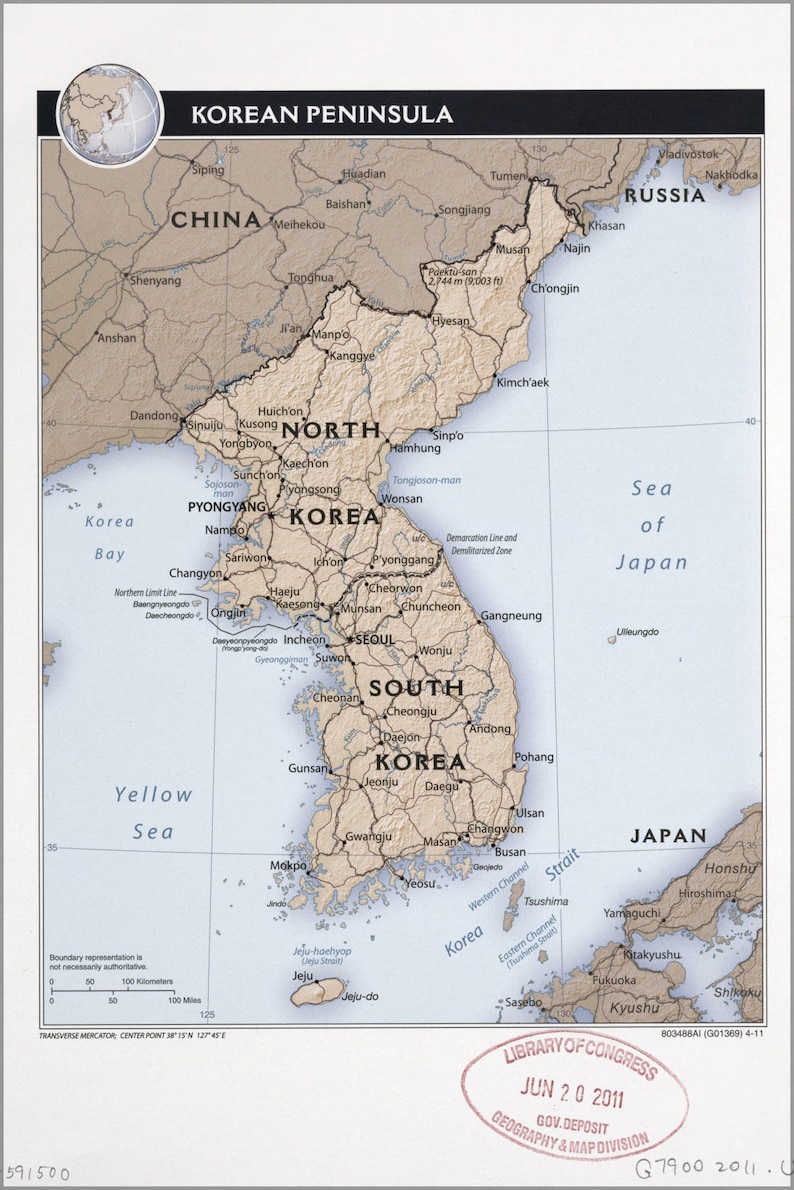
Può essere utile tenere a mente una cartina geografica della Corea. Pyong Yang, la capitale della Corea del Nord, si colloca circa sulla metà occidentale del paese. Tra le località indicate successivamente nell’articolo:
- Il fiume Yalu (noto come Amnok in coreano) è il più lungo corso d’acqua della Corea del Nord. Con i suoi 795 km, nasce dal Monte Paektu e segna gran parte del confine naturale tra la Cina e la Corea del Nord, per poi sfociare nella baia di Corea.
- La Contea di Unsan è nella parte nord orientale.
- Il “bacino di Chosin” – in giapponese, perché gli americani usavano mappe giapponesi, in coreano Lago di Changjin – è nella parte occidentale, sul versante della Baia di Corea, a metà strada tra Pyong Yang e il confine con la Cina.
- Hungnam, il cui porto venne attaccato dalla colonna orientale delle Nazioni Unite, è nella parte orientale, sul Mar del Giappone.
- Shangganlinge Jincheng, località delle ultime due battaglie della parte finale della guerra, si trovano – da quanto capisco – nei pressi del confine definitiva tra le due Coree.
By mm
E' possibile commentare l'articolo nell'area "Commenti del Mese"