


Altri Economisti » Saggi in evidenza » Saggi, articoli su riviste. Krugman ed altri » Selezione del Mese
La regola fiscale britannica che impone un rapporto debito/PIL decrescente è una regola volta a sopprimere gli investimenti pubblici. Di Simon Wren-Lewis (dal blog Mainly Macro, 7 luglio 2026)
Tuesday, 7 July 2026
The UK’s falling debt to GDP fiscal rule is a rule to suppress public investment
Simon Wren-Lewis
 Let me start by apologising to any regular readers of this blog. None of the arguments in this post are particularly new. But with a new PM and possibly a new Chancellor, and with Andy Burnham committed to high public investment including many more council houses, it seems appropriate to make this argument once again in as clear a way as I can.
The UK has for some time had two fiscal rules. One targets some measure of the future deficit as a ratio of GDP and the other requires debt to GDP to be falling. The second rule is about the change in debt, but the first rule is about the deficit which is the change in debt. So why do we need two rules which essentially target the same thing? [1]
Here are the variables relevant to the two current fiscal rules since 2000.
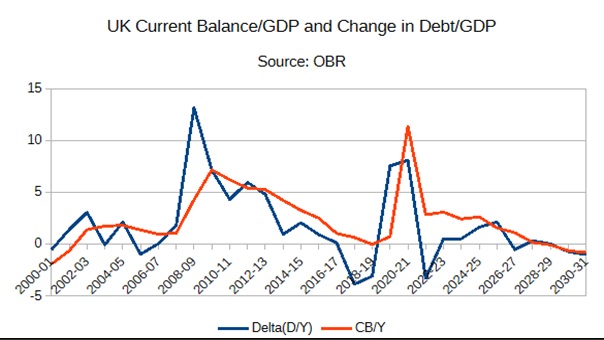
The red line, the ‘golden rule’ that targets the current balance, shows the impact of the two recent recessions quite clearly. As I have long argued, fiscal rules should be abandoned during recessions and the subsequent recovery. The blue line, which is the change in the government’s net financial liabilities as a ratio of GDP, is the falling debt to GDP rule. It is much more erratic, which automatically makes it a bad target for any fiscal rule, but it essentially follows the path of the current balance. The main difference is that, for a given deficit, when GDP is falling then debt to GDP will rise sharply, and equally when GDP is growing strongly debt to GDP will tend to fall.
So why two rules? Why not choose the more stable of the two, the golden rule for the current balance? The technical answer, which many of you will have already noted, is that the current balance excludes public investment. Without the second rule, then in theory public investment could be very high leaving debt to GDP rising even if the current balance was zero.
As I have argued many times, the golden rule makes good sense in principle. As long as we measure the current balance some years ahead to strip out erratic elements or the impact of the business cycle, and as long as we have an opt out from the rule in major recessions when interest rates are likely to hit their lower bound, then it makes sense to aim to have a fiscal policy that neither adds to nor subtracts from aggregate demand. A current balance target is a shorthand way of doing that. [2]
Why exclude public investment from the deficit rule? There are many reasons, but one of the more compelling is that politicians will often try to meet any total deficit rule by cutting public investment rather than current spending, because the political cost is less immediately visible. 2010 austerity was a clear example of that, and we are still suffering its effects. Better to target the current balance, which forces politicians to make choices that don’t damage the economy in the longer term. A second, and at least as important, reason is that individual public investment decisions should be based on whether the projects themselves are worthwhile, and not on some aggregate financial number. When a business sees a good investment opportunity it borrows to invest, so why shouldn’t the government do the same?
But that compelling logic means that it makes no sense to have a second fiscal rule, the only purpose of which is to constrain aggregate public investment. The logic that removes public investment from the deficit rule is just overridden by having this second fiscal rule! At best the falling debt to GDP rule just duplicates the golden rule, and at worst it constrains public investment and adds an erratic element to fiscal policy as well.
This case against the falling debt to GDP rule is overwhelming. I have been arguing against this rule for a very long time, and I challenge anyone to come up with a justification for it that I cannot debunk pretty quickly. It is true that a zero current balance rule will not guarantee falling debt to GDP, but if the government really wants to be absolutely sure that debt to GDP falls it can achieve that by targeting a small surplus for the current balance. (See the section headed “Why not focus solely on the current budget balance?” in Ben Zaranko’s discussion.)
I don’t think the reason we have the falling debt to GDP rule is technocratic. Nor do I think it is just because some want low public investment for political reasons. Instead I think it is part of what I call mediamacro. According to too many journalists in the media, government debt is bad, so a good fiscal rule has to ensure that this bad thing is getting smaller. If the rule doesn’t actually specify that directly, then from a mediamacro point of view that is a problem.
I became convinced of that when I was on John McDonnell’s Economic Advisory Council when he was Shadow Chancellor. I wrote a paper for the Council arguing for a form of golden rule and ditching the falling debt to GDP rule, and the only dissent on the Council (chaired by John) was from those against having any rule at all. But later I got a call from John’s team, saying that their political/media advice was that a form of a falling debt rule had to be included as well. (They did, however, try and reduce the eratic nature of that target.) I suspect every Chancellor before or since has been getting that advice, and as ever politics trumps economics.
If we combine the falling debt to GDP rule’s constraint on public investment under a Labour government with the Conservative predisposition to cut this investment anyway, and it becomes much easier to understand why UK public investment is unusually low. There may be occasions where the pressure on real resources is such that the additional domestic demand generated by additional public investment in the short term might lead to unacceptably high interest rates, but that is not always the case and the falling debt to GDP rule applies whatever. This constraint on public investment also means that Labour governments search for other less sensible means to increase public investment that avoid immediate public borrowing, such as PFI for example.
If public perception, which in reality means media perception, is really believed to be a binding constraint, then there is a way around the problem, a route that John McDonnell later took. Rachel Reeves has already redefined the measure of debt in the rule to include financial assets held by the government. The obvious next step would be to include physical assets as well, meaning that public investment would have no long term impact on the measure of debt [3] The disadvantage of taking that route is that it brings the falling debt to GDP rule even closer to the golden rule. but if that hastens the eventual demise of the falling debt to GDP rule so much the better. [4]
So my advice to a new Chancellor, if we have one, is to get the Treasury to write a paper setting out why the falling debt to GDP rule along side the golden rule simply acts as a barrier to public investment, and how under reasonable assumptions the golden rule achieves falling debt to GDP in the medium to long term. [5] At the same time commission an analysis of where the public sector capital stock has declined over the last twenty years, together with a sector by sector analysis of possible supply side constraints on increasing public investment today.
The argument in this post is not that the government should never try to reduce debt if it can. I think there is a good reason why it might wish to, which is to make room for large increases in debt following a major recession. It can do this by, if necessary, setting a non-zero target for the current balance. Instead my argument here is that public investment should not be the means by which that debt is reduced, which is the inevitable consequence of having falling debt to GDP as our second fiscal rule.
[1] Why not target the level of debt? Targeting debt makes no sense, because debt is the shock absorber that allows governments to avoid erratic movements in spending and taxes following shocks to the economy. But debt (or money creation) has a downside, which is that it allows politicians to avoid tax increases or spending cuts not for the sake of the economy but for the sake of their popularity (‘deficit bias’). That is why it makes sense to target the difference between spending and taxes, which is the deficit.
[2] Why not just look at inflationary pressure directly, as MMT would argue? Well if the central bank is doing its job then it will always ensure inflationary pressure some years ahead is zero.The reason to have a balanced fiscal policy is to avoid our central bank having to raise interest rates just because politicians don’t like making unpopular decisions..
[3] Indeed, if the asset was worth more than than its initial cost, it would increase public wealth
[4] Subtracting physical assets from debt is a logical next step to the change made my Rachel Reeves to subtract public sector financial assets. It transforms debt into a measure of public sector wealth or net worth, that many including another Andy have suggested as a traget in the past.
[5] While supportive of looking at public sector net worth, a standard line from the IFS among others is that looking at gross debt is still useful because public sector assets don’t necessarily yield a financial return. But this doesn’t matter, because in that case the government can just raise future taxes following the golden rule. Indeed that is the right outcome from an intergenerational point of view, because those who benefit from the investment pay for it.
I think this and similar arguments for retaining a rule involving gross rather than net debt owe something to the concept of ‘fiscal space’, which is the idea that there is some upper limit to what public debt can be, and crucially that we are always close to that limit. There is an upper limit to public debt, which is the level of debt where the government would rather default than raise taxes to service that debt. That level is an order of magnitude above current levels. Other attempts to suggest a much lower limit to the public debt tend to fall apart empirically.
La regola fiscale britannica che impone un rapporto debito/PIL decrescente è una regola volta a sopprimere gli investimenti pubblici.
Di Simon Wren-Lewis
Permettetemi innanzitutto di scusarmi con i lettori abituali di questo blog. Nessuno degli argomenti trattati in questo post è particolarmente nuovo. Tuttavia, con un nuovo Primo Ministro e forse anche un nuovo Cancelliere dello Scacchiere, e con Andy Burnham impegnato in ingenti investimenti pubblici, tra cui la costruzione di molte più case popolari, mi sembra opportuno riproporre questo argomento nel modo più chiaro possibile.
Il Regno Unito ha da tempo due regole fiscali. Una mira a una qualche misura del deficit futuro in rapporto al PIL e l’altra richiede che il rapporto debito/PIL sia in calo. La seconda regola riguarda la variazione del debito, mentre la prima riguarda il deficit, che è la variazione del debito. Quindi perché abbiamo bisogno di due regole che essenzialmente mirano alla stessa cosa? [1]
Ecco le variabili rilevanti per le due attuali regole fiscali in vigore dal 2000.
La linea rossa, la “regola d’oro” che mira al saldo corrente, mostra chiaramente l’impatto delle due recenti recessioni. Come sostengo da tempo, le regole fiscali dovrebbero essere abbandonate durante le recessioni e la successiva ripresa. La linea blu, che rappresenta la variazione delle passività finanziarie nette del governo in rapporto al PIL, è la regola del debito decrescente rispetto al PIL. È molto più irregolare, il che la rende automaticamente un obiettivo inadeguato per qualsiasi regola fiscale, ma essenzialmente segue l’andamento del saldo corrente. La differenza principale è che, a parità di deficit, quando il PIL è in calo il rapporto debito/PIL aumenterà bruscamente, e analogamente quando il PIL è in forte crescita il rapporto debito/PIL tenderà a diminuire.
Perché dunque due regole? Perché non scegliere la più stabile delle due, la regola aurea del saldo corrente? La risposta tecnica, che molti di voi avranno già notato, è che il saldo corrente esclude gli investimenti pubblici. Senza la seconda regola, in teoria gli investimenti pubblici potrebbero essere molto elevati, con conseguente aumento del rapporto debito/PIL anche se il saldo corrente fosse pari a zero.
Come ho sostenuto più volte, la regola d’oro ha un buon senso in linea di principio. Finché misuriamo il saldo corrente con qualche anno di anticipo per eliminare gli elementi erratici o l’impatto del ciclo economico, e finché abbiamo una possibilità di derogare alla regola nelle recessioni gravi, quando è probabile che i tassi di interesse raggiungano il loro limite inferiore, allora ha senso puntare ad avere una politica fiscale che non aggiunga né sottragga alla domanda aggregata. Un obiettivo di saldo corrente è un modo abbreviato per farlo. [2]
Perché escludere gli investimenti pubblici dalla regola del deficit? Ci sono molte ragioni, ma una delle più convincenti è che i politici spesso cercano di rispettare la regola del deficit totale tagliando gli investimenti pubblici piuttosto che la spesa corrente, perché il costo politico è meno immediatamente visibile. L’austerità del 2010 ne è stato un chiaro esempio, e ne subiamo ancora le conseguenze. Meglio puntare al saldo corrente, il che costringe i politici a fare scelte che non danneggino l’economia nel lungo termine. Una seconda ragione, altrettanto importante, è che le singole decisioni di investimento pubblico dovrebbero basarsi sulla validità dei progetti stessi, e non su un dato finanziario aggregato. Quando un’impresa individua una buona opportunità di investimento, si indebita per investire, quindi perché il governo non dovrebbe fare lo stesso?
Ma questa logica ineccepibile implica che non abbia senso avere una seconda regola fiscale, il cui unico scopo è quello di limitare gli investimenti pubblici complessivi. La logica che esclude gli investimenti pubblici dalla regola del deficit viene semplicemente annullata dall’introduzione di questa seconda regola fiscale! Nella migliore delle ipotesi, la regola del rapporto debito/PIL decrescente non fa altro che duplicare la regola aurea, e nella peggiore limita gli investimenti pubblici e introduce anche un elemento di imprevedibilità nella politica fiscale.
Le argomentazioni contro la regola del rapporto debito/PIL in calo sono schiaccianti. Mi oppongo a questa regola da molto tempo e sfido chiunque a trovare una giustificazione che io non possa confutare rapidamente. È vero che una regola del saldo corrente pari a zero non garantisce una riduzione del rapporto debito/PIL, ma se il governo vuole essere assolutamente certo che il rapporto debito/PIL diminuisca, può ottenerlo puntando a un piccolo surplus nel saldo corrente. (Vedi la sezione intitolata “Perché non concentrarsi esclusivamente sul saldo di bilancio corrente?” nella discussione di Ben Zaranko ).
Non credo che la ragione per cui abbiamo la regola del debito pubblico in calo rispetto al PIL sia tecnocratica. Né credo che sia semplicemente perché alcuni vogliono bassi investimenti pubblici per ragioni politiche. Penso piuttosto che faccia parte di ciò che chiamo macroeconomia mediatica. Secondo troppi giornalisti, il debito pubblico è un male, quindi una buona regola fiscale deve garantire che questo male si riduca. Se la regola non lo specifica esplicitamente, allora da un punto di vista macroeconomico mediatico questo è un problema.
Mi sono convinto di ciò quando facevo parte del Consiglio consultivo economico di John McDonnell, all’epoca Ministro delle Finanze ombra. Ho scritto un documento per il Consiglio sostenendo l’adozione di una sorta di regola aurea e l’abbandono della regola del rapporto debito/PIL decrescente, e l’unico dissenso in seno al Consiglio (presieduto da John) proveniva da coloro che si opponevano all’adozione di qualsiasi regola. In seguito, però, ho ricevuto una telefonata dal team di John, il quale mi ha comunicato che, secondo i loro consigli politici e mediatici, era necessario includere anche una forma di regola del rapporto debito/PIL decrescente. (Cercarono, tuttavia, di attenuare la natura irregolare di tale obiettivo). Sospetto che ogni Ministro delle Finanze, prima o dopo di lui, abbia ricevuto questo consiglio e, come sempre, la politica ha la meglio sull’economia.
Se combiniamo il vincolo imposto dalla regola del rapporto debito/PIL decrescente sugli investimenti pubblici sotto un governo laburista con la predisposizione dei conservatori a tagliare comunque tali investimenti, diventa molto più facile capire perché gli investimenti pubblici nel Regno Unito siano insolitamente bassi . Ci possono essere casi in cui la pressione sulle risorse reali è tale che l’aumento della domanda interna generato da ulteriori investimenti pubblici nel breve termine potrebbe portare a tassi di interesse inaccettabilmente alti, ma non è sempre così e la regola del rapporto debito/PIL decrescente si applica comunque. Questo vincolo sugli investimenti pubblici implica anche che i governi laburisti cerchino altri mezzi meno sensati per aumentare gli investimenti pubblici che evitino l’indebitamento pubblico immediato, come ad esempio i PFI (Private Finance Initiative).
Se si crede davvero che la percezione pubblica, che in realtà significa percezione dei media, sia un vincolo vincolante, allora esiste una via d’uscita dal problema, una strada che John McDonnell ha poi percorso. Rachel Reeves ha già ridefinito la misura del debito nella regola per includere le attività finanziarie detenute dal governo. Il passo successivo ovvio sarebbe quello di includere anche le attività fisiche, il che significa che gli investimenti pubblici non avrebbero alcun impatto a lungo termine sulla misura del debito [3]. Lo svantaggio di intraprendere questa strada è che avvicina ulteriormente la regola del debito decrescente rispetto al PIL alla regola aurea, ma se ciò accelera l’eventuale declino della regola del debito decrescente rispetto al PIL, tanto meglio. [4]
Il mio consiglio, quindi, a un nuovo Cancelliere, se ne avremo uno, è di far sì che il Tesoro scriva un documento che spieghi perché la regola del debito decrescente rispetto al PIL, insieme alla regola aurea, agisce semplicemente come una barriera agli investimenti pubblici e come, in base a ipotesi ragionevoli, la regola aurea raggiunga un debito decrescente rispetto al PIL nel medio-lungo termine. [5] Allo stesso tempo, commissionare un’analisi di dove lo stock di capitale del settore pubblico è diminuito negli ultimi vent’anni, insieme a un’analisi settore per settore dei possibili vincoli dal lato dell’offerta all’aumento degli investimenti pubblici oggi.
In questo articolo non intendo sostenere che il governo non debba mai cercare di ridurre il debito pubblico, se possibile. Credo che ci siano valide ragioni per cui potrebbe desiderarlo, ovvero per far fronte a un eventuale aumento del debito in seguito a una grave recessione. Può farlo, se necessario, fissando un obiettivo diverso da zero per il saldo corrente. La mia tesi, invece, è che gli investimenti pubblici non dovrebbero essere il mezzo per ridurre il debito, conseguenza inevitabile dell’adozione, come seconda regola fiscale, della riduzione del rapporto debito/PIL.
[1] Perché non puntare al livello del debito? Puntare al debito non ha senso, perché il debito è l’ammortizzatore che permette ai governi di evitare movimenti erratici nella spesa e nelle tasse a seguito di shock economici. Ma il debito (o la creazione di moneta) ha un lato negativo, ovvero permette ai politici di evitare aumenti delle tasse o tagli alla spesa non per il bene dell’economia, ma per il bene della loro popolarità (“distorsione da deficit”). Ecco perché ha senso puntare alla differenza tra spesa e tasse, ovvero al deficit.
[2] Perché non guardare direttamente alla pressione inflazionistica, come sosterrebbe la MMT? Beh, se la banca centrale fa il suo lavoro, garantirà sempre che la pressione inflazionistica tra qualche anno sia pari a zero. Il motivo per cui è necessaria una politica fiscale equilibrata è evitare che la nostra banca centrale debba aumentare i tassi di interesse solo perché ai politici non piace prendere decisioni impopolari.
[3] Infatti, se il bene valesse più del suo costo iniziale, aumenterebbe la ricchezza pubblica
[4] Sottrarre le attività fisiche dal debito è un passo logico successivo al cambiamento apportato da Rachel Reeves per sottrarre le attività finanziarie del settore pubblico. Trasforma il debito in una misura della ricchezza o del patrimonio netto del settore pubblico, che molti, incluso un altro Andy, hanno suggerito come obiettivo in passato.
[5] Pur essendo favorevoli a considerare il patrimonio netto del settore pubblico, una linea standard dell’IFS, tra gli altri, è che esaminare il debito lordo è comunque utile perché le attività del settore pubblico non necessariamente producono un ritorno finanziario. Ma questo non ha importanza, perché in tal caso il governo può semplicemente aumentare le tasse future seguendo la regola d’oro. In effetti, questo è il risultato giusto da un punto di vista intergenerazionale, perché coloro che beneficiano dell’investimento lo pagano.
Credo che questa e altre argomentazioni simili a favore del mantenimento di una regola che consideri il debito lordo anziché quello netto siano in qualche modo legate al concetto di “spazio fiscale”, ovvero all’idea che esista un limite massimo al debito pubblico e, soprattutto, che ci troviamo sempre vicini a tale limite. Esiste un limite massimo al debito pubblico, che rappresenta il livello di debito oltre il quale il governo preferirebbe dichiarare default piuttosto che aumentare le tasse per onorare tale debito. Questo livello è di un ordine di grandezza superiore a quello attuale. Altri tentativi di suggerire un limite molto più basso al debito pubblico tendono a fallire empiricamente.
By mm
E' possibile commentare l'articolo nell'area "Commenti del Mese"