


Altri Economisti » Saggi in evidenza » Saggi, articoli su riviste. Krugman ed altri » Selezione del Mese
Perché Lula ha vinto? I guerrieri di classe possono contrastare le grandi imprese. «La vittoria di Lula offre una lezione che il centrosinistra occidentale ha dimenticato». Di Yanis Varoufakis (da Unherd, 27 ottobre 2026)
Oct. 27, 2026
Why Lula won? Class warriors can thwart Big Business.
‘Lula’s victory offers a lesson that the Western centre-left has forgotten’.
Yanis Varoufakis
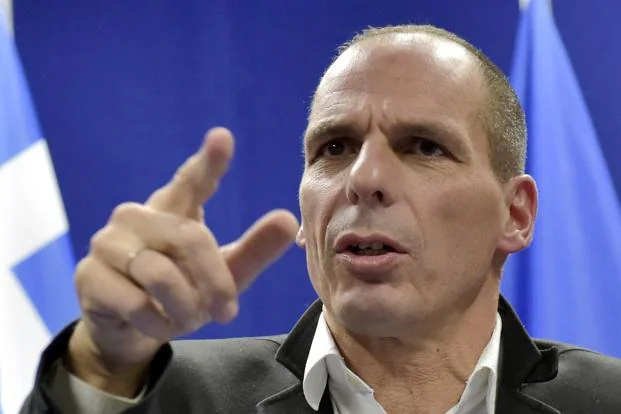 On Sunday, the Brazilian people achieved something that the pundits said was impossible. They re-elected as president the former metalworker Luiz Inácio Lula da Silva, on the eve of his 81st birthday, stemming the Trumpist, evangelical, neofascist Zionist tide sweeping through Latin America. Only three weeks earlier, he came second in the first round to Flávio Bolsonaro, son and political heir of the man who had plotted a cynical coup against Brazilian democracy — moreover, the main candidates eliminated during the first round were rightists whose voters had every reason to gravitate to Bolsonaro. Nonetheless, Lula overturned this deficit and won with a margin of nearly four and a half million votes.
His victory tells a broader story. A story about a war: the class war that the few are waging against the many across the Western world. It’s a war acknowledged by its victors, including Warren Buffet who once quipped: “There’s class warfare, all right, but it’s my class, the rich class, that’s making war, and we’re winning.” Mr Buffett was not exaggerating. For almost four decades, Western governments and central banks have pulled every policy lever in the same direction: to make the assets of the few burgeon at the expense of the incomes of the many.
Consider the numbers. Between 1952 and 1988, economic growth was behind nearly all the gains of the West’s stock market. From 1989 onwards, though, growth explains only about a quarter. The largest share, around 40%, came from income diverted from workers to shareholders. Another third came from cheaper money and lower perceived risk. This is not wealth creation. It is wealth extraction: a transfer from those who work to those who own, exacerbated by states making cheap money available to those who already have loads, and trumpeted on the evening news as “a strong economy”.
And the wealthy rarely pay taxes: they don’t actually earn an income, but, rather, own assets, which are taxed only when sold. So they avoid selling, borrow against their soaring assets at 1 or 2% and live on the loan. Then they die without ever paying tax on their capital gains and pass on the loot to their kids at ridiculously low inheritance taxes. Meanwhile, the worker borrows on a credit card at 20% to pay bills and put food on the table, her debts the mirror image of their fortunes.
This arrangement relies on one crucial thing: asset prices must be protected from collapse. And when they are threatened, the state comes to the rescue: 2001, 2008, 2020, the British gilt crisis of 2022, Silicon Valley Bank in 2023. Together this string of bail outs reveals the rule: when financial wealth is threatened, governments discover that money can be found. Today, in the United States, the top 10% own almost 90% of all shares. It’s a similar picture in the UK and the EU. The US federal government and the Fed, the UK governments and the Bank of England, Brussels and the European Central Bank have repeatedly intervened to insure the wealth of the wealthy, doing “whatever it takes” to prop up their asset prices. The rest of the population pays the premium, in the form of the austerity that follows every bailout.
Yet austerity does more than redistribute the costs of a crisis. It also changes the balance of power between those who own and those who work. To understand why it keeps returning, even though it undermines economic growth, consider the story Marx told about Thomas Peel, who in 1829 sailed to Western Australia’s Swan River with £50,000 of provisions and three hundred working-class men, women and children. On arrival, his workers walked off into the bush and worked for themselves. Peel had brought money, tools and labour, but he could not bring capitalism along, because his workers had alternatives.
Capital, Marx concluded, is not a thing, a mere asset, but a social relation: the power of those who own to get those who don’t own to do things they’d rather not do. Austerity is not an economic policy. It is a disciplinary device, keeping the many sufficiently insecure and indebted to accept “an offer they can’t refuse”. The ruling class’s deepest fear is not inflation or debt. It is to end up like Peel: asset rich, but without the power to compel.
Here is the part of the story that keeps me awake at night. When centre-left politicians, from Bill Clinton, Barack Obama and Tony Blair to Gerhard Schröder, François Hollande and Andy Burnham, abandoned the language of class, a void opened up in the working-class heartlands of the West. Into that void stepped a venomous storyteller with a century of experience in filling such voids: the resurgent far-right, including its rebranded fascists. It offers left-behind workers a story of dignity, then redirects their fury away from the owner who shipped their factory abroad, or the minister who sold their council house to some fund, and towards the migrant next door. It does not end the class war. It merely divides one side — the workers — to rule over them. It camouflages the war.
From the red suburbs of Paris to south Piraeus, from England’s red wall to Italy’s rust belt in Taranto, from the American rust belt to eastern Germany, the pattern is relentless. And so a fatalism has set in: the class war waged from above, we are told, must inevitably end in a neofascist, racist, misogynist revival.
Brazil has just refuted this fatalism.
Brazil knows the monster intimately. It lived through four years of Jair Bolsonaro, with his nostalgia for the military dictatorship. On 8 January 2023, his followers stormed the Congress, the Supreme Court and the presidential palace. Brazil’s far Right is not a fringe. Unlike Trump’s ragtag stormtroopers, they had years of running a dictatorship. They won the first round of this election. They had the White House fully behind them, while the US Democrats, once again demonstrating their irrelevance, stayed mute. And yet, yesterday, they were defeated.
How? Not by hand-wringing about “populism”, nor by a centrist promise to manage the status quo more efficiently. Lula won because he did what the Western centre-left has forgotten how to do: he spoke the language of class, and backed it with policies that shifted power, however modestly, from the few to the many. His government exempted those earning up to 5,000 reals a month from income tax and paid for it with a minimum tax on the very richest. During Brazil’s G20 presidency, he proposed a global minimum tax on billionaires. When Lula tells Brazilian workers that the elites have rigged the game, he points his finger upwards, at the rentier and the speculator, not sideways, at the migrant or the poor. But the most innovative weapon in Brazil’s arsenal is one that few outside Latin America have heard of. It is called Pix.
“Lula’s victory offers a lesson that the Western centre-left has forgotten.”
Every time you tap a card to pay for a coffee, a toll is levied. Visa, Mastercard and the banks take a cut, often 2% or 3%, from every transaction. Multiply this by billions of purchases a day and you begin to recognise one of the most lucrative rent-extraction machines ever devised. These are not profits made in competitive markets but a toll extracted by those who own the digital rails on which our economic lives now run. It is a key weapon of technofeudalism.
Unlike Britain, Europe or, of course, America, Brazil’s central bank moved to limit this rabid exploitation. It launched an alternative: a public, instant payment system, free for individuals and with capped fees for merchants. A Brazilian pays a street vendor in Salvador or sends money to her mother in Recife, instantly, using Pix from her phone, with no card company or bank taking its slice. Brazilians adopted it with astonishing enthusiasm. Last year, Pix processed almost 80 billion transactions and overtook credit cards as the most popular way to pay online.
Pix is the Swan River of the digital age. It gave tens of millions of Brazilians, including the poorest, who had never had a bank card, an alternative to the toll booths of Big Finance. And, like Peel, the collectors did not take it lying down. This summer, Washington imposed 25% tariffs on most Brazilian exports, and its trade representative explicitly named Pix as a grievance, complaining that it “unfairly disadvantaged” American payment companies! The most powerful government on Earth deployed its trade arsenal against a Brazilian free public service for being too successful at denying rents to Visa and Mastercard.
Lula did not blink. He defended Pix as a Brazilian public good, and Brazilians rewarded him for it. Here, at last, is a concrete example of limiting the power of Big Business, Big Finance and Big Tech: not with slogans, but by building public digital infrastructure that removes the opportunity to extract rent in the first place.
Let me, however, refrain from romanticising Lula. Lula is no revolutionary. His margin was admittedly narrow. Brazil’s Congress remains in the grip of agribusiness and evangelical blocs. Its central bank still keeps interest rates punishingly high, a weapon of the class war if ever there was one. Lula himself has compromised much too much with those vested interests, and lost support as a result.
But Brazil has shown us three things: first, that the class war waged against the many does not have to end in fascism. Fascism flourishes only when the Left vacates the battlefield of class. Second, a progressive government can win by pointing upwards, at those who extract rent, rather than downwards, at those who suffer. And third, Big Business can be defeated, at least forced to lose some battles, by building public alternatives to its rent-extracting machines.
So, here is the challenge to Britain, to Europe, to the people of the United States. Build your own Pix: public payment rails that end the tolls of Visa and Mastercard. Tax capital gains, not just income. Make every rescue conditional, with the public receiving real, permanent equity in return. Create a public investment bank as an alternative to the bond markets. Restore the bargaining power of the workforce. And give working people what Peel’s workers found at Swan River: an alternative, and thus the freedom to say no.
Buffett was right. There is a class war, and his class has been winning hands down. But yesterday, in Brazil, it lost a battle; though not the war. It lost because a working-class president dared to name the war and fight it using weapons fashioned to defend the many.
Perché Lula ha vinto? I guerrieri di classe possono contrastare le grandi imprese.
«La vittoria di Lula offre una lezione che il centrosinistra occidentale ha dimenticato».
Di Yanis Varoufakis
Domenica, il popolo brasiliano ha compiuto qualcosa che gli esperti ritenevano impossibile. Ha rieletto presidente l’ex operaio metallurgico Luiz Inácio Lula da Silva, alla vigilia del suo 81° compleanno, arginando l’ ondata trumpiana , evangelica , neofascista e sionista che sta travolgendo l’America Latina. Solo tre settimane prima, era arrivato secondo al primo turno, dietro a Flávio Bolsonaro, figlio ed erede politico dell’uomo che aveva ordito un cinico colpo di stato contro la democrazia brasiliana; inoltre, i principali candidati eliminati al primo turno erano esponenti della destra, i cui elettori avevano tutte le ragioni per propendere per Bolsonaro. Ciononostante, Lula ha ribaltato questo svantaggio e ha vinto con un margine di quasi quattro milioni e mezzo di voti.
La sua vittoria racconta una storia più ampia. Una storia di guerra: la guerra di classe che i pochi stanno conducendo contro i molti in tutto il mondo occidentale. Una guerra riconosciuta dai suoi vincitori, tra cui Warren Buffett, che una volta ha ironizzato: “C’è una guerra di classe, certo, ma è la mia classe, la classe ricca, che la sta conducendo, e la stiamo vincendo”. Buffett non esagerava. Per quasi quarant’anni, i governi e le banche centrali occidentali hanno azionato ogni leva politica nella stessa direzione: far crescere il patrimonio dei pochi a scapito dei redditi dei molti.
Consideriamo i numeri. Tra il 1952 e il 1988, la crescita economica è stata alla base di quasi tutti i guadagni del mercato azionario occidentale. Dal 1989 in poi, tuttavia, la crescita spiega solo circa un quarto. La quota maggiore, circa il 40%, è derivata dal reddito dirottato dai lavoratori agli azionisti. Un altro terzo è dovuto al denaro a basso costo e alla minore percezione del rischio. Questa non è creazione di ricchezza. È estrazione di ricchezza: un trasferimento da chi lavora a chi possiede, esacerbato dagli Stati che rendono disponibile denaro a basso costo a chi ne ha già in abbondanza, e sbandierato nei telegiornali serali come “un’economia forte”.
E i ricchi raramente pagano le tasse: in realtà non guadagnano un reddito, ma possiedono beni, che vengono tassati solo al momento della vendita. Quindi evitano di vendere, prendono in prestito denaro garantito dai loro beni in forte crescita a un tasso dell’1 o 2% e vivono di rendita. Poi muoiono senza aver mai pagato tasse sulle plusvalenze e lasciano in eredità il patrimonio ai figli con imposte di successione ridicolmente basse. Nel frattempo, il lavoratore si indebita con una carta di credito al 20% per pagare le bollette e mettere il cibo in tavola, e i suoi debiti sono il riflesso delle loro fortune.
Questo sistema si basa su un principio fondamentale: i prezzi degli asset devono essere protetti dal crollo. E quando sono minacciati, lo Stato interviene in soccorso: 2001, 2008, 2020, la crisi dei titoli di Stato britannici del 2022, la Silicon Valley Bank nel 2023. Questa serie di salvataggi rivela la regola: quando la ricchezza finanziaria è minacciata, i governi scoprono che si possono trovare i soldi. Oggi, negli Stati Uniti, il 10% più ricco possiede quasi il 90% di tutte le azioni. La situazione è simile nel Regno Unito e nell’UE. Il governo federale statunitense e la Fed, i governi britannici e la Banca d’Inghilterra, Bruxelles e la Banca Centrale Europea sono intervenuti ripetutamente per tutelare la ricchezza dei più ricchi, facendo “tutto il necessario” per sostenere i prezzi dei loro asset. Il resto della popolazione paga il prezzo, sotto forma di austerità, che segue ogni salvataggio.
Eppure l’austerità fa più che ridistribuire i costi di una crisi. Cambia anche gli equilibri di potere tra chi possiede e chi lavora. Per capire perché continua a ripresentarsi, nonostante mini la crescita economica, si pensi alla storia che Marx raccontò di Thomas Peel, il quale nel 1829 salpò per il fiume Swan, nell’Australia Occidentale, con 50.000 sterline di provviste e trecento operai, tra uomini, donne e bambini. Al loro arrivo, i suoi lavoratori si diressero verso la boscaglia e si misero al lavoro per conto proprio. Peel aveva portato denaro, strumenti e manodopera, ma non poteva portare con sé il capitalismo, perché i suoi lavoratori avevano delle alternative.
Marx concluse che il capitale non è una cosa, un semplice bene, ma una relazione sociale: il potere di chi possiede di costringere chi non possiede a fare cose che preferirebbe non fare. L’austerità non è una politica economica. È uno strumento disciplinare, che mantiene i molti sufficientemente insicuri e indebitati da accettare “un’offerta che non possono rifiutare”. La paura più profonda della classe dominante non è l’inflazione o il debito. È di finire come Peel: ricchi di beni, ma senza il potere di imporre la propria volontà.
Ecco la parte della storia che mi tiene sveglio la notte. Quando i politici di centrosinistra, da Bill Clinton, Barack Obama e Tony Blair a Gerhard Schröder, François Hollande e Andy Burnham, hanno abbandonato il linguaggio di classe, si è creato un vuoto nei quartieri operai occidentali. In quel vuoto si è inserito un narratore velenoso con un secolo di esperienza nel riempire tali vuoti: l’estrema destra risorgente, compresi i suoi fascisti ribattezzati. Offre ai lavoratori lasciati indietro una storia di dignità, poi reindirizza la loro furia dal proprietario che ha delocalizzato la loro fabbrica all’estero, o dal ministro che ha venduto la loro casa popolare a qualche fondo, verso il migrante della porta accanto. Non pone fine alla lotta di classe. Si limita a dividere una parte – i lavoratori – per dominarli. Camuffa la guerra.
Dalle periferie rosse di Parigi al sud del Pireo, dal Muro Rosso inglese alla cintura industriale di Taranto, dalla cintura industriale americana alla Germania orientale, lo schema è implacabile. E così si è instaurato un fatalismo: la guerra di classe condotta dall’alto, ci viene detto, deve inevitabilmente concludersi con una rinascita neofascista, razzista e misogina.
Il Brasile ha appena smentito questo fatalismo.
Il Brasile conosce intimamente questo mostro. Ha vissuto quattro anni di Jair Bolsonaro, con la sua nostalgia per la dittatura militare. L’8 gennaio 2023, i suoi seguaci hanno preso d’assalto il Congresso, la Corte Suprema e il palazzo presidenziale. L’estrema destra brasiliana non è un gruppo marginale. A differenza delle sgangherate truppe d’assalto di Trump, loro hanno alle spalle anni di esperienza alla guida di una dittatura. Hanno vinto il primo turno di queste elezioni. Avevano la Casa Bianca completamente dalla loro parte, mentre i Democratici statunitensi, dimostrando ancora una volta la loro irrilevanza, sono rimasti in silenzio. Eppure, ieri, sono stati sconfitti.
Come? Non lamentandosi del “populismo”, né promettendo, con intenti centristi, di gestire lo status quo in modo più efficiente. Lula ha vinto perché ha fatto ciò che il centrosinistra occidentale ha dimenticato: ha parlato il linguaggio delle classi e lo ha sostenuto con politiche che hanno spostato il potere, seppur modestamente, dai pochi ai molti. Il suo governo ha esentato dall’imposta sul reddito chi guadagna fino a 5.000 real al mese, finanziando la misura con un’imposta minima sui più ricchi. Durante la presidenza brasiliana del G20, ha proposto un’imposta minima globale sui miliardari. Quando Lula dice ai lavoratori brasiliani che le élite hanno truccato il gioco, punta il dito verso l’alto, contro i rentier e gli speculatori, non di lato, contro i migranti o i poveri. Ma l’arma più innovativa nell’arsenale del Brasile è una di cui pochi al di fuori dell’America Latina hanno sentito parlare. Si chiama Pix.
“La vittoria di Lula offre una lezione che il centrosinistra occidentale ha dimenticato.”
Ogni volta che si usa una carta per pagare un caffè, viene prelevato un pedaggio. Visa, Mastercard e le banche si prendono una percentuale, spesso del 2% o del 3%, su ogni transazione. Moltiplicate questa cifra per miliardi di acquisti al giorno e inizierete a comprendere uno dei meccanismi di estrazione di rendita più redditizi mai concepiti. Non si tratta di profitti derivanti da mercati competitivi, ma di un pedaggio estorto da chi possiede le infrastrutture digitali su cui si basa la nostra vita economica. È un’arma fondamentale del tecnofeudalesimo.
A differenza di Gran Bretagna, Europa o, naturalmente, America, la banca centrale brasiliana è intervenuta per limitare questo sfruttamento sfrenato. Ha lanciato un’alternativa: un sistema di pagamento pubblico e istantaneo, gratuito per i privati e con commissioni massime per gli esercenti. Un brasiliano può pagare un venditore ambulante a Salvador o inviare denaro alla madre a Recife, istantaneamente, utilizzando Pix dal proprio telefono, senza che alcuna società di carte di credito o banca prelevi la propria commissione. I brasiliani lo hanno accolto con un entusiasmo sorprendente. L’anno scorso, Pix ha elaborato quasi 80 miliardi di transazioni, superando le carte di credito come metodo di pagamento online più diffuso.
Pix è il Fiume Swan dell’era digitale [1]. Ha offerto a decine di milioni di brasiliani, compresi i più poveri, che non avevano mai avuto una carta di credito, un’alternativa ai caselli della grande finanza. E, come Peel, i creditori non sono rimasti a guardare. Quest’estate, Washington ha imposto dazi del 25% sulla maggior parte delle esportazioni brasiliane e il suo rappresentante commerciale ha esplicitamente citato Pix come motivo di reclamo, lamentandosi del fatto che “svantaggiasse ingiustamente” le società di pagamento americane! Il governo più potente del mondo ha schierato il suo arsenale commerciale contro un servizio pubblico brasiliano gratuito per aver avuto troppo successo nel negare profitti a Visa e Mastercard.
Lula non ha battuto ciglio. Ha difeso Pix come bene pubblico brasiliano, e i brasiliani lo hanno premiato per questo. Ecco, finalmente, un esempio concreto di come limitare il potere delle grandi imprese, della grande finanza e delle grandi aziende tecnologiche: non con slogan, ma costruendo un’infrastruttura digitale pubblica che elimini in primo luogo la possibilità di estrarre profitti.
Vorrei però evitare di idealizzare Lula. Lula non è un rivoluzionario. Il suo margine di vittoria è stato, a dire il vero, ristretto. Il Congresso brasiliano rimane in mano ai blocchi agroindustriali ed evangelici. La banca centrale continua a mantenere i tassi d’interesse a livelli proibitivi, un’arma della lotta di classe, se mai ce n’è stata una. Lo stesso Lula ha ceduto troppo a questi interessi consolidati, perdendo così consensi.
Ma il Brasile ci ha mostrato tre cose: primo, che la lotta di classe condotta contro la maggioranza non deve necessariamente sfociare nel fascismo. Il fascismo prospera solo quando la sinistra abbandona il campo di battaglia della lotta di classe. Secondo, un governo progressista può vincere puntando il dito verso l’alto, contro coloro che estorcono rendite, piuttosto che verso il basso, contro coloro che soffrono. E terzo, le grandi imprese possono essere sconfitte, o quantomeno costrette a perdere alcune battaglie, costruendo alternative pubbliche ai loro meccanismi di estrazione di rendite.
Ecco dunque la sfida per la Gran Bretagna, per l’Europa e per il popolo degli Stati Uniti. Costruite il vostro sistema di pagamento pubblico, un sistema che metta fine ai pedaggi di Visa e Mastercard. Tassate le plusvalenze, non solo il reddito. Subordinate ogni salvataggio a una condizione, con la collettività che riceva in cambio un patrimonio reale e permanente. Create una banca d’investimento pubblica come alternativa ai mercati obbligazionari. Ripristinate il potere contrattuale dei lavoratori. E date ai lavoratori ciò che i lavoratori di Peel hanno trovato a Swan River: un’alternativa, e quindi la libertà di dire di no.
Buffett aveva ragione. C’è una guerra di classe, e la sua classe l’ha vinta a mani basse. Ma ieri, in Brasile, ha perso una battaglia; non la guerra, però. Ha perso perché un presidente della classe operaia ha osato dare un nome alla guerra e combatterla usando armi create per difendere i molti.
[1] Il riferimento al Fiume Swan – in questo caso un fiume australiano, e sembra che l’iniziale carriera accademica di Varoufakis si sia svolta in Australia – debba in effetti essere interpretato come un paragone del sistema di pagamento brasiliano Pix al fiume australiano, descrivendolo come un’infrastruttura pubblica gratuita che ha offerto un’alternativa alle commissioni della grande finanza. Perché il Pix, come a suo tempo anche il fiume, ha eliminato un sistema di “caselli” imposti dai colossi dei pagamenti. Yanis è rimasto legato alla sua giovanile esperienza in Australia, ma gli stessi “baroni briganti” dominavano tanti altri fiumi, a partire dal Reno tedesco.
By mm
E' possibile commentare l'articolo nell'area "Commenti del Mese"